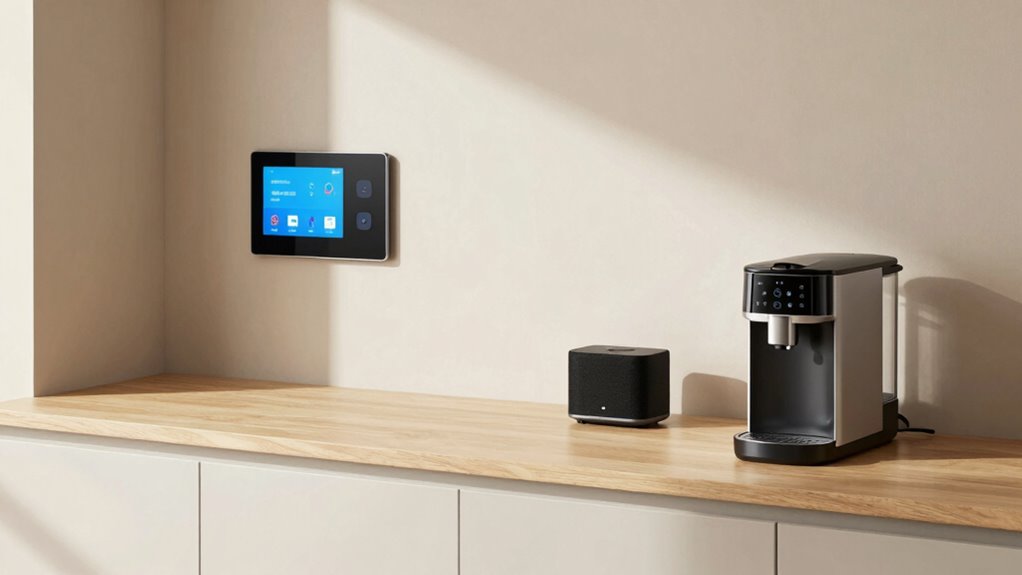

Not every kitchen needs the same smart devices because your routines, budget, and existing systems shape what’s practical. Some gadgets are perfect for frequent use and automation, while others are just nice-to-haves for occasional use. Compatibility and ease of integration also matter; not all devices work well with your current setup. By considering your specific needs and how often you’ll use each device, you can choose what truly adds value. Keep exploring to discover smarter choices for your kitchen.
Key Takeaways
- Different kitchens have varying space, layout, and existing appliances, affecting which smart devices are practical.
- Budget constraints determine the selection of suitable gadgets; not all devices offer essential value for every user.
- Usage patterns differ; some kitchens benefit from frequent-use devices, while others may only need occasional smart tools.
- Compatibility with current home automation systems is crucial; not all devices integrate seamlessly in every setup.
- Personal needs and routines vary, so customizing device choices ensures they genuinely enhance your specific kitchen experience.
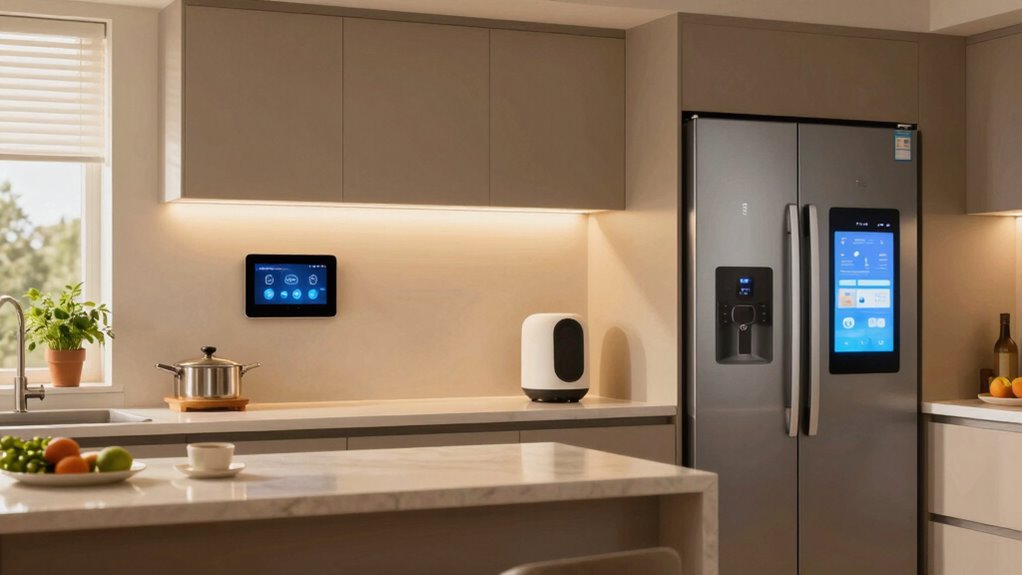
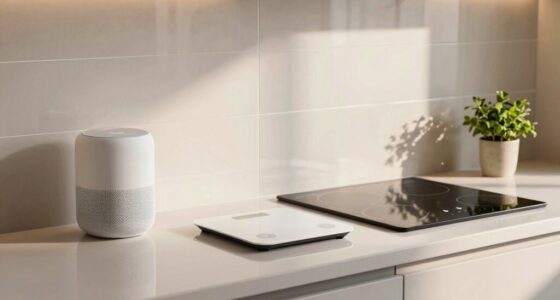
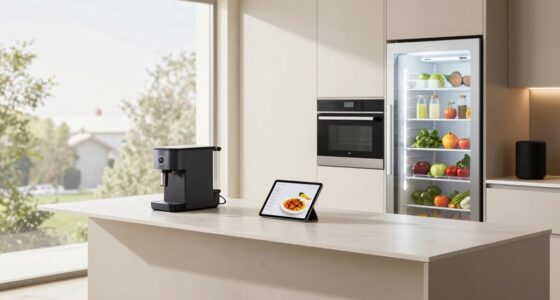
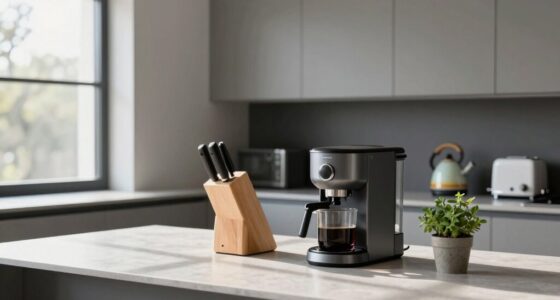
Smart devices can make your kitchen more efficient and convenient, but not every smart gadget suits every home. When you’re considering adding smart technology to your kitchen, it’s crucial to think about smart device compatibility. Not all devices work seamlessly with your existing appliances or smart home ecosystem. For example, if you already have a specific brand of smart speaker or hub, you’ll want to choose devices that are compatible to avoid frustration and the need for extra adapters or hubs. Compatibility issues can lead to devices that don’t sync properly or function as intended, which might end up costing you more time and money in the long run. Before making a purchase, check the device’s compatibility with your current setup, whether it’s your smartphone, voice assistant, or other smart appliances. Ensuring smart device compatibility can save you from potential headaches and additional expenses later on. It’s also wise to consider how well the devices integrate with your existing home automation system, if you have one. Budget considerations also play a critical role in deciding which smart devices to incorporate into your kitchen. Smart gadgets can range from affordable plugs and sensors to high-end refrigerators with built-in screens and AI features. You need to evaluate what makes sense for your financial situation. If you’re on a tight budget, start with basic, affordable options like smart plugs or thermostats that can turn regular appliances into smart devices. These can provide a lot of convenience without breaking the bank. On the other hand, if you’re willing to invest more for premium features like automated grocery ordering or advanced recipe guidance, then you might consider more sophisticated appliances. But always remember that the most expensive smart device isn’t necessarily the best fit for your needs. It’s about finding the right balance between features and cost, ensuring you get value without overspending. Additionally, think about how often you’ll use these devices. Some smart gadgets are designed for frequent use and can genuinely streamline your cooking or cleaning routines. Others might be more of a luxury or novelty, which you’ll use only occasionally. Considering smart device usage patterns can help you prioritize which gadgets will truly enhance your daily routine. When choosing smart devices, it’s also important to consider how well they integrate with other smart home products, so your entire system functions smoothly together. Moreover, staying informed about latest smart home technology trends can help you make smarter choices tailored to your evolving needs. If you love experimenting with recipes or want your kitchen to be as automated as possible, then allocating a higher budget toward smart appliances makes sense.
As an affiliate, we earn on qualifying purchases.
Frequently Asked Questions
How Do I Prioritize Which Smart Devices to Buy First?
Start by evaluating your needs and lifestyle, then prioritize devices that offer the most user customization and ease of use. Check device compatibility with your existing smart home setup to avoid future issues. Focus on essential items like smart bulbs or voice assistants first, as they provide immediate convenience. Once these are in place, expand to specialized devices based on your cooking habits or household routines.
Are There Privacy Concerns With Smart Kitchen Gadgets?
Yes, smart kitchen gadgets can pose privacy risks. Studies show that over 60% of smart devices have vulnerabilities affecting data security. When you use these gadgets, your personal information might be collected, stored, or transmitted without your full awareness. To protect yourself, always check privacy policies, change default passwords, and keep firmware updated. Being cautious helps reduce potential data security issues and keeps your kitchen smarter, not riskier.
Can Smart Devices Be Easily Integrated With Existing Kitchen Appliances?
Yes, smart devices can often be easily integrated with your existing kitchen appliances. Many come with voice control features, making operation simple and hands-free. To guarantee smooth compatibility, check the appliance’s compatibility with your chosen smart hub or platform. While integration is straightforward in many cases, some older appliances may require adapters or upgrades. Always verify compatibility beforehand to enjoy seamless smart kitchen functionality.
What Are the Cost Differences Between Basic and Advanced Smart Kitchen Devices?
Think of smart kitchen devices as a spectrum of flavors—you get what you pay for. Basic models are like simple ingredients, affordable but offering fewer features, fitting tight budgets. Advanced devices are rich, layered, and packed with extras, but they come with higher costs. When weighing your options, consider your budget considerations and feature comparisons carefully, ensuring you choose devices that enhance your kitchen without emptying your wallet.
How Durable Are Smart Devices in a Busy Kitchen Environment?
Smart devices in busy kitchens are generally designed with durability testing and material resilience in mind, making them quite sturdy. You can expect them to withstand splashes, heat, and daily wear and tear. However, their longevity depends on the quality of construction and proper maintenance. To guarantee they last, choose devices with high durability ratings and follow manufacturer guidelines for cleaning and usage.
smart refrigerator with touchscreen
As an affiliate, we earn on qualifying purchases.
As an affiliate, we earn on qualifying purchases.
Conclusion
Just like a tailor crafts a suit to fit perfectly, your kitchen should reflect your unique needs. Not every smart device is essential for everyone—think of it as choosing the right tools for your own culinary adventure. By selecting gadgets that truly enhance your space, you create a kitchen that’s both functional and inspiring. Remember, in the world of smart tech, one size definitely doesn’t fit all—find what works best for you and make your kitchen truly yours.
voice-controlled kitchen assistant
As an affiliate, we earn on qualifying purchases.
As an affiliate, we earn on qualifying purchases.
smart home compatible kitchen devices
As an affiliate, we earn on qualifying purchases.
As an affiliate, we earn on qualifying purchases.