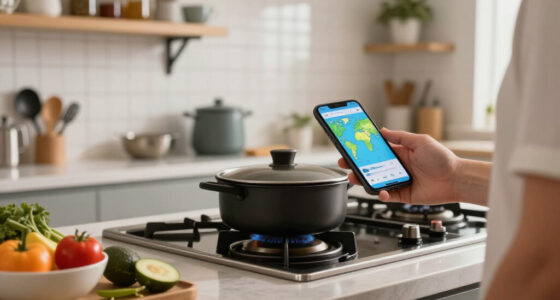
Many home cooks are unplugging their gadgets to reconnect with traditional cooking techniques that emphasize craftsmanship, patience, and sensory engagement. This shift allows you to slow down, become mindful, and truly enjoy the process of preparing meals. By using manual methods, you can boost your skills, feel more connected to your food, and embrace sustainability. If you keep exploring, you’ll discover more about how this movement is transforming kitchens everywhere.
Key Takeaways
- Home cooks seek a more tactile and sensory-rich experience by using traditional, manual cooking methods.
- Unplugging from gadgets fosters mindfulness, allowing for greater focus and appreciation during meal preparation.
- Revival of analog techniques preserves culinary heritage and emphasizes sustainability through resource-efficient practices.
- Manual methods enhance skills, patience, and understanding of ingredients, improving overall cooking proficiency.
- Many prefer unplugged cooking for nostalgic, authentic experiences that reconnect them with traditional craftsmanship.

In recent years, a growing movement has sparked a revival of analog cooking methods, reminding us of the charm and craftsmanship behind traditional techniques. You might notice that more home cooks are choosing to unplug their gadgets and embrace manual techniques that connect them to the roots of culinary artistry. This shift is driven by a desire for kitchen nostalgia—an appreciation for the tactile experience of cooking and the satisfaction of creating meals without relying solely on screens or automated devices. It’s about reclaiming the joy of craftsmanship, where every chop, stir, and simmer feels intentional and rewarding.
When you opt for manual techniques, you’re engaging more senses, which can elevate the entire cooking experience. Instead of setting a timer and walking away, you’re actively involved in every step, feeling the texture of dough, smelling the aroma of spices, and hearing the gentle sizzle of ingredients hitting the pan. This heightened awareness fosters a deeper connection to your food, making each meal more meaningful. Plus, there’s an undeniable charm in practicing traditional methods like kneading bread by hand, grinding spices with a mortar and pestle, or flipping pancakes on a stovetop skillet. These techniques not only preserve culinary heritage but also give you a sense of mastery and patience that many modern gadgets can’t replicate.
Many home cooks find that unplugging from technology simplifies their routines, removing distractions and encouraging mindfulness. Without the constant ping of notifications or reliance on automated timers, you become more present in the kitchen. This intentional approach often results in better-tasting dishes, as you’re more attuned to how ingredients behave and how flavors develop. It’s a form of slow cooking that values process over speed, allowing you to experiment and learn from each step. Additionally, manual techniques often promote a better understanding of kitchen hydraulics, which can improve your overall culinary skills and efficiency.
Unplugging from technology fosters mindfulness and improves flavor by making you more present in your cooking process.
Moreover, this revival taps into a desire for authenticity and sustainability. Manual techniques usually require fewer resources and less energy, aligning with eco-conscious values. They also foster a sense of self-sufficiency—knowing how to make simple, wholesome meals by hand can be empowering and freeing from dependency on high-tech appliances. As you embrace this approach, you might rediscover family recipes passed down through generations or create new traditions rooted in simplicity and craftsmanship. Ultimately, unplugging from gadgets to return to manual techniques not only enhances your culinary skills but also reconnects you with the timeless joy of cooking—an experience that’s both nostalgic and deeply satisfying.
As an affiliate, we earn on qualifying purchases.
Frequently Asked Questions
How Does Analog Cooking Impact Food Taste and Quality?
You’ll notice that analog cooking markedly boosts flavor enhancement and preserves texture better than digital methods. When you cook with traditional tools, you gain greater control over heat and timing, allowing ingredients to develop richer flavors and maintain their natural textures. This hands-on approach helps you create more authentic, high-quality dishes, making every bite more satisfying. Plus, it reconnects you with the art of cooking, enhancing the overall taste experience.
Are There Specific Recipes That Benefit Most From Manual Techniques?
They say, “The devil is in the details,” and manual techniques shine brightest in recipes like handmade pasta and artisan bread. When you knead and shape dough by hand, you enhance flavor, texture, and authenticity. These crafts benefit from your tactile involvement, allowing you to control the process closely. So, if you want rich, nuanced results, stick to manual methods for these timeless favorites, making each bite truly special.
What Are the Safety Considerations for Traditional Cooking Methods?
When using traditional cooking methods, you should prioritize fire safety by never leaving flames unattended and keeping a fire extinguisher nearby. Practice proper knife handling by cutting away from your body, keeping blades sharp, and using a stable cutting surface. Stay alert to avoid burns or cuts, and make certain proper ventilation to prevent smoke buildup. These safety measures help you enjoy cooking without accidents or injuries.
How Do Costs Compare Between Analog and Modern Kitchen Tools?
You’ll find that the cost comparison favors traditional tools, often costing 50% less upfront than modern gadgets. While an appliance investment can seem pricey initially, it’s usually more affordable long-term because analog tools don’t require electricity or frequent upgrades. Plus, you avoid hidden costs like maintenance and repairs. So, going traditional not only saves money but also offers a more sustainable, budget-friendly cooking experience.
Can Digital Gadgets Be Fully Replaced by Traditional Cooking Skills?
You can fully replace digital gadgets with traditional cooking skills by embracing a digital detox and rediscovering culinary nostalgia. When you focus on manual techniques, you develop a deeper understanding of flavors and processes, making your cooking more intentional and satisfying. While gadgets offer convenience, practicing classic methods allows you to connect with the art of cooking, fostering creativity and confidence without relying on technology.
As an affiliate, we earn on qualifying purchases.
Conclusion
By unplugging your gadgets and embracing the art of analog cooking, you’re not just simplifying — you’re revolutionizing your kitchen experience. Imagine transforming your meals into masterpieces, crafted with your own hands, free from digital distractions. This revival isn’t just a trend; it’s a culinary awakening that could change how you see cooking forever. So, go ahead, ditch the buttons and embrace the timeless magic of traditional cooking — your taste buds will thank you for it!
cast iron skillet for stovetop cooking
As an affiliate, we earn on qualifying purchases.
As an affiliate, we earn on qualifying purchases.
As an affiliate, we earn on qualifying purchases.