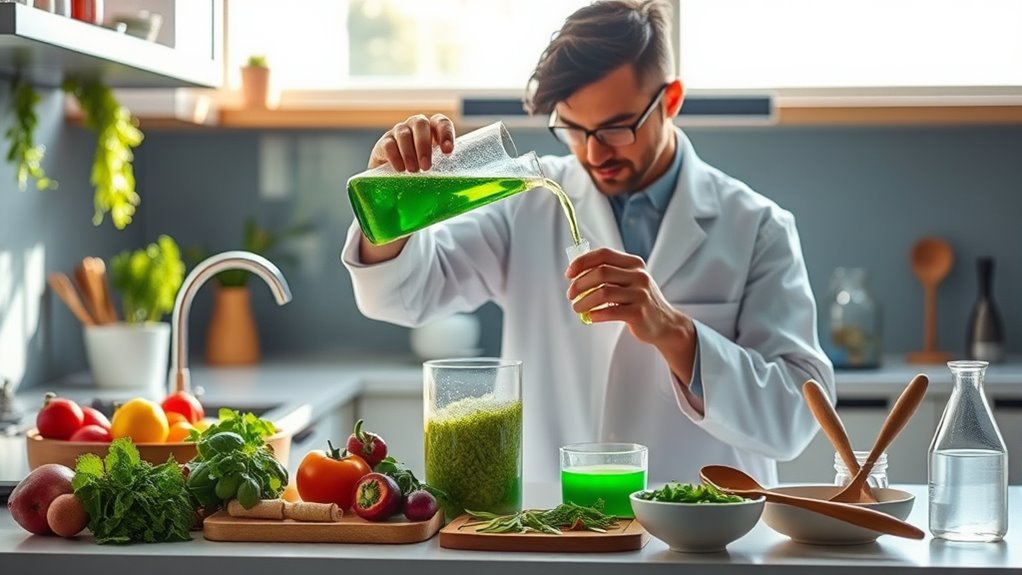

Food science innovations are now coming directly to your home kitchen, making cooking more sustainable, flavorful, and nutritious. You can use biodegradable packaging, natural flavor enhancers, and preservation methods that extend freshness without chemicals. These breakthroughs help you prepare healthier meals, reduce waste, and enjoy restaurant-quality flavors at home. As these technologies continue evolving, you’ll discover even more ways to transform your cooking—so keep exploring to see what’s next for your culinary experiences.
Key Takeaways
- Sustainable packaging solutions are now available for home use, reducing waste and environmental impact.
- Natural flavor enhancement technologies allow home cooks to achieve restaurant-quality taste effortlessly.
- New preservation methods extend food freshness at home without synthetic chemicals.
- Innovations in eco-friendly transportation support sustainable lifestyles, indirectly influencing food sourcing and delivery.
- Kitchen tools incorporating lab-developed technologies enable healthier, tastier, and more efficient home cooking.
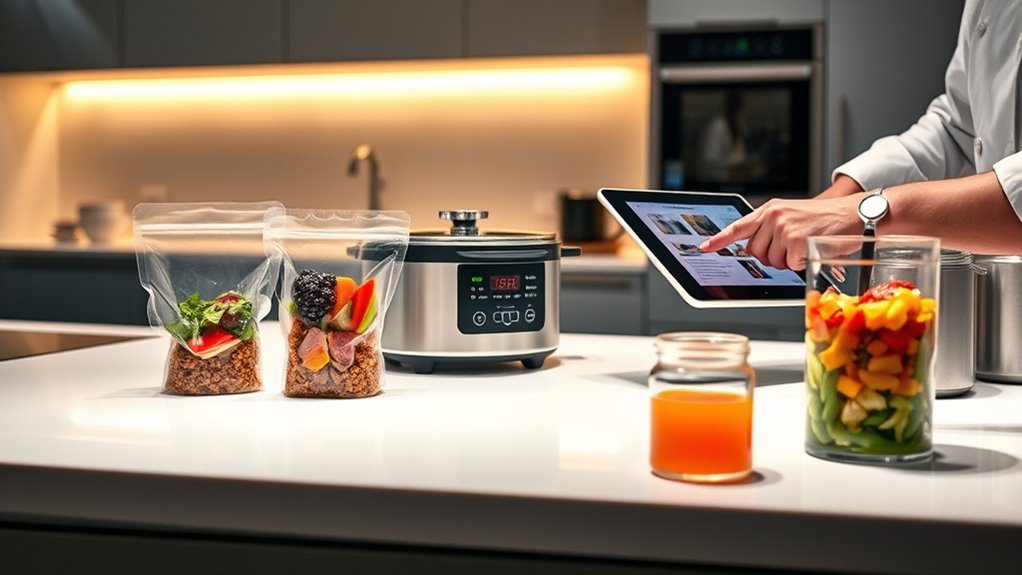
Food science innovations are transforming how we produce, preserve, and enjoy our favorite dishes. These advancements are not only changing professional kitchens and food industries but are also making their way into your home kitchen, offering you smarter, more sustainable, and tastier options. One of the most noticeable shifts is the rise of sustainable packaging. Instead of relying on single-use plastics, companies are developing biodegradable, reusable, and eco-friendly materials that keep your food fresh while reducing environmental impact. As a consumer, you’re now more likely to find packaging that’s designed to break down naturally or can be repurposed, helping you minimize waste without sacrificing convenience. This shift toward sustainable packaging means you can enjoy your meals with a clearer conscience, knowing you’re supporting eco-friendly practices.
Beyond packaging, flavor enhancement technologies are revolutionizing how you cook and savor your meals. Modern food science employs natural flavor compounds and innovative techniques like microencapsulation to intensify taste without adding excess salt, sugar, or artificial additives. For example, you might discover seasonings or marinades that deliver a more vibrant taste with less effort, thanks to encapsulated flavors that release gradually during cooking. These advancements allow you to elevate your dishes effortlessly, achieving restaurant-quality flavors at home. Plus, flavor enhancement isn’t limited to taste; it also includes aroma, mouthfeel, and even the visual appeal of your food, making every meal more satisfying.
Imagine using a simple ingredient that’s been scientifically tailored to maximize its flavor potential, transforming a basic dish into something extraordinary. Food scientists are also developing targeted delivery systems that enhance nutritional content, ensuring you get more health benefits from everyday foods. These innovations make it easier to stick to dietary goals while still enjoying delicious meals. Additionally, new preservation techniques, like high-pressure processing and natural preservatives, extend shelf life without relying on synthetic chemicals, so your ingredients stay fresh longer and retain their natural qualities. Moreover, innovations in electric bike technology such as improved motors and batteries are making it easier for consumers to adopt sustainable transportation options, aligning with the broader trend of environmentally conscious choices.
All of these innovations—sustainable packaging, flavor enhancement, improved preservation—are geared toward making your home cooking more sustainable, flavorful, and efficient. They empower you to create meals that are healthier, more environmentally friendly, and deeply satisfying. As food science continues to evolve, you’ll find yourself with more tools and options to experiment with, turning everyday cooking into a smarter, tastier experience. From lab breakthroughs to your kitchen counter, these innovations are redefining what’s possible in home cooking, ensuring you enjoy better food today and in the future.
Frequently Asked Questions
How Do Food Science Innovations Impact Nutritional Value?
Food science innovations boost your meals’ nutritional value through nutritional enhancement and ingredient preservation. These advancements help retain vitamins and minerals during processing, ensuring you get maximum health benefits from your food. Techniques like advanced packaging and natural preservatives also extend shelf life, so your ingredients stay fresh longer. As a result, you enjoy healthier, more nutritious meals at home, making it easier to meet your dietary goals and maintain overall well-being.
Are New Kitchen Gadgets Safe for Everyday Use?
A stitch in time saves nine, so you should always check if new kitchen gadgets are safe before daily use. Most smart appliances are tested for safety, but it’s essential to follow manufacturer instructions and guarantee proper installation. Prioritize kitchen safety by researching each device’s safety features and user reviews. When used correctly, these gadgets can make cooking easier and safer, giving you peace of mind in your home.
How Affordable Are These Food Technology Products?
These food technology products are generally affordable, especially when you consider the cost comparison to traditional methods and the benefits they offer. While accessibility challenges exist, many innovations are designed to be user-friendly and budget-conscious, making them accessible for everyday use. You can often find options at various price points, helping you enjoy advanced food tech without overspending. Overall, these products are becoming more affordable and easier to incorporate into your kitchen routine.
Can Home Cooks Replicate Professional Food Science Techniques?
Absolutely, you can replicate professional food science techniques in your kitchen. Think of it as opening a treasure chest—learning new cooking techniques and experimenting with ingredient substitutions transforms your dishes. With a little practice, you’ll master precision cooking methods, sous-vide, or even fermentation. These innovations are designed to be user-friendly, empowering you to elevate your meals with confidence, creativity, and a touch of culinary magic right at home.
What Are the Environmental Benefits of These Innovations?
You’ll find these food science innovations help the environment by reducing waste and energy use. Sustainable packaging minimizes plastic waste, making your kitchen more eco-friendly. Energy-efficient appliances cut down on electricity consumption, lowering your carbon footprint. By adopting these innovations, you actively contribute to a healthier planet while enjoying the benefits of advanced food tech at home. It’s a simple way to make your cooking more sustainable and eco-conscious.
Conclusion
As you bring cutting-edge food science from the lab into your kitchen, you’re blending innovation with tradition. While molecular gastronomy redefines textures, your everyday ingredients still ground you in comfort. This juxtaposition reminds you that progress doesn’t replace the familiar—it elevates it, turning simple meals into extraordinary experiences. Embrace these advancements, knowing they’re shaping the future of home cooking, where science and tradition beautifully coexist in every bite you create.