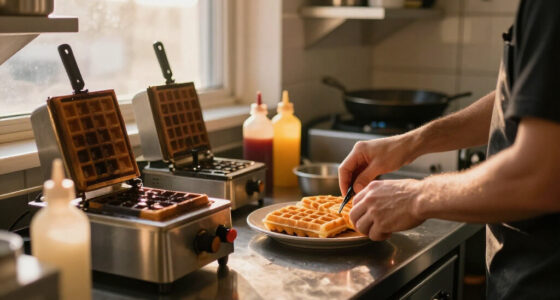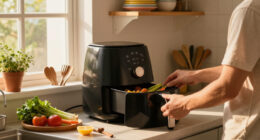
In the kitchen of 2030, smart appliances work together to anticipate your needs, from refrigerators suggesting recipes to ovens adjusting cooking times automatically. Eco-friendly materials and energy-efficient tech minimize your environmental impact, while environmental sensors optimize comfort and save power. Automation learns your routines, simplifying tasks like cleaning and grocery management. This responsive, sustainable space adapts seamlessly to you—discover how this future kitchen transforms daily life as you explore further.
Key Takeaways
- Fully integrated smart appliances anticipate needs, automatically managing cooking, cleaning, and routine tasks for seamless kitchen operation.
- Eco-friendly materials and energy-efficient designs reduce environmental impact, incorporating solar power and waste management systems.
- Adaptive environmental sensors optimize lighting, temperature, and ambiance, enhancing comfort and sustainability.
- Automated routines learn user habits, controlling lighting, music, and appliance functions to streamline daily activities.
- Advanced connectivity and virtual assistants provide real-time guidance, recipe management, and maintenance, creating a responsive kitchen ecosystem.

By 2030, kitchens have transformed into smart, intuitive spaces that seamlessly blend technology with everyday life. When you step into your kitchen, you’ll immediately notice how smart appliances have become the heart of your cooking and cleaning routines. These appliances aren’t just devices; they’re intelligent partners that anticipate your needs. Your refrigerator, for example, can track expiration dates, suggest recipes based on available ingredients, and even order groceries automatically. Your oven knows when to preheat and adjusts cooking times based on the dish you’re preparing, all controlled via voice commands or your mobile device. This integration reduces guesswork and enhances efficiency, making your kitchen more responsive and personalized.
Sustainability takes center stage in the design and functionality of these future kitchens. You’ll find that sustainable materials dominate countertop surfaces, flooring, and cabinetry. Recycled plastics, bamboo, and responsibly sourced wood not only look sleek but also minimize environmental impact. These materials are durable, easy to clean, and contribute to a greener lifestyle. Smart appliances are designed with energy efficiency in mind, reducing power consumption without sacrificing performance. Solar-powered devices and energy-harvesting surfaces will further diminish your carbon footprint, making your kitchen a model of eco-conscious living. The focus on sustainability extends beyond materials—waste management becomes smarter too. Integrated composting units and waste-sorting systems automatically separate recyclables from trash, simplifying eco-friendly disposal and encouraging responsible habits.
In this future kitchen, automation extends beyond appliances. Your smart kitchen system learns your routines, adjusting lighting, temperature, and even music to suit your mood or the time of day. When you wake up, your coffee maker brews fresh coffee, and your smart blinds open to let in natural light. During meal prep, sensors monitor ingredient freshness and suggest modifications, preventing waste and ensuring optimal nutrition. Cleaning becomes effortless with robotic dishwashers and self-cleaning surfaces that actively maintain hygiene. You’ll have virtual assistants guiding you through recipes or managing grocery lists, freeing you to focus on the joy of cooking rather than the logistics. Additionally, smart sensors embedded throughout the space will monitor environmental conditions and provide real-time feedback to optimize comfort and efficiency.

LG LRFLC2706S 27 Cu. Ft. French Door Smart Refrigerator in Stainless Steel
- Counter-Depth Max Design: 27 cu. ft. large capacity, flush fit
- Internal Water & Ice Dispenser: Filtered water and built-in ice maker
- Smart Cooling System: Maintains consistent temperature for freshness
As an affiliate, we earn on qualifying purchases.
As an affiliate, we earn on qualifying purchases.
Frequently Asked Questions
How Will Autonomous Kitchens Impact Traditional Cooking Skills?
Autonomous kitchens will likely diminish the emphasis on traditional cooking skills as smart recipes and appliance integration handle tasks for you. You might rely more on technology, reducing the need to learn manual techniques. While this adds convenience, it could also lead to a decline in culinary expertise. However, you’ll still have opportunities to experiment and learn if you choose to stay engaged with the process.
What Safety Features Will Be Integrated Into Future Kitchen Robots?
Imagine a robot with the agility of a ninja—future kitchen robots will have advanced safety features like robotic safety sensors and appliance security systems that prevent accidents. You’ll find built-in emergency shut-offs, obstacle detection, and real-time monitoring guaranteeing safe operation. These features protect you from harm, reduce risks, and ensure your kitchen remains a secure environment, giving you peace of mind while enjoying automated cooking.
How Will Kitchens of 2030 Address Food Waste Reduction?
You’ll find kitchens of 2030 actively reducing food waste through smart inventory systems that track ingredients in real-time, alerting you when items expire or need replenishing. Waste tracking features monitor leftovers and disposal habits, encouraging mindful consumption. This combination helps you plan meals efficiently, minimizes waste, and promotes sustainability effortlessly, making your kitchen not only smarter but also more environmentally friendly.
Will Autonomous Kitchens Be Customizable for Dietary Restrictions?
Imagine stepping into your fully autonomous kitchen, much like a sci-fi movie. You’ll find it highly customizable for dietary restrictions, effortlessly adjusting to your needs. With personalized meal plans, the kitchen’s AI caters to gluten-free, vegan, or low-sodium diets, ensuring every dish aligns perfectly with your preferences. You’ll have complete control over dietary restriction customization, making healthy eating both easy and enjoyable in your futuristic culinary space.
How Will Privacy Be Maintained With Advanced Kitchen Monitoring?
You’ll see that privacy stays protected through smart surveillance that only captures necessary data, and data encryption keeps your information secure. Advanced kitchens will use these technologies to monitor activities without invading your privacy, ensuring your personal details remain confidential. By combining smart surveillance with robust encryption, you can enjoy a fully autonomous kitchen that’s both high-tech and respectful of your privacy.

Robotics Workflow Design Mug – Plan Every Automated Cell Step – 11 oz Ceram
- Robotics Workflow Design: Plan Every Automated Cell Step
- Double-Sided Print: Vibrant blue and orange design
- Durable Ceramic Construction: High-quality 11 oz ceramic mug
As an affiliate, we earn on qualifying purchases.
As an affiliate, we earn on qualifying purchases.
Conclusion
As you envision the kitchen of 2030, embrace the exciting evolution of effortless, intelligent, and innovative innovations. Imagine automated appliances assisting, AI anticipating your appetite, and appliances aligning seamlessly to simplify your space. The future fosters a flawless fusion of function and fun, transforming your culinary corner into a mesmerizing, convenient haven. Get ready to greet a gleaming, game-changing generation of kitchens where technology takes your taste buds on a thrilling, transformative journey.

Breville BOV450XL Mini Smart Oven, Brushed Stainless Steel
- Compact Countertop Design: Space-saving mini oven with 8 functions
- Element iQ System: Smart quartz elements for precise cooking
- Fast Preheat: 1800 Watt quick preheat for faster meals
As an affiliate, we earn on qualifying purchases.
As an affiliate, we earn on qualifying purchases.

EKO Kitchen Compost Bin, 7L / 1.85 Gal Stainless Steel with Removable Inner Bucket and Deodorizer Compartment, 2-in-1 Countertop Compost Bin with Lid, Food Waste Caddy for Kitchen (MMT & Black Finish)
- Sleek Modern Design: Stylish and functional kitchen bin
- Multiple Placement Options: Hangs, mounts, or countertop use
- Sealed Swing Lid: Odor control and hygiene
As an affiliate, we earn on qualifying purchases.
As an affiliate, we earn on qualifying purchases.