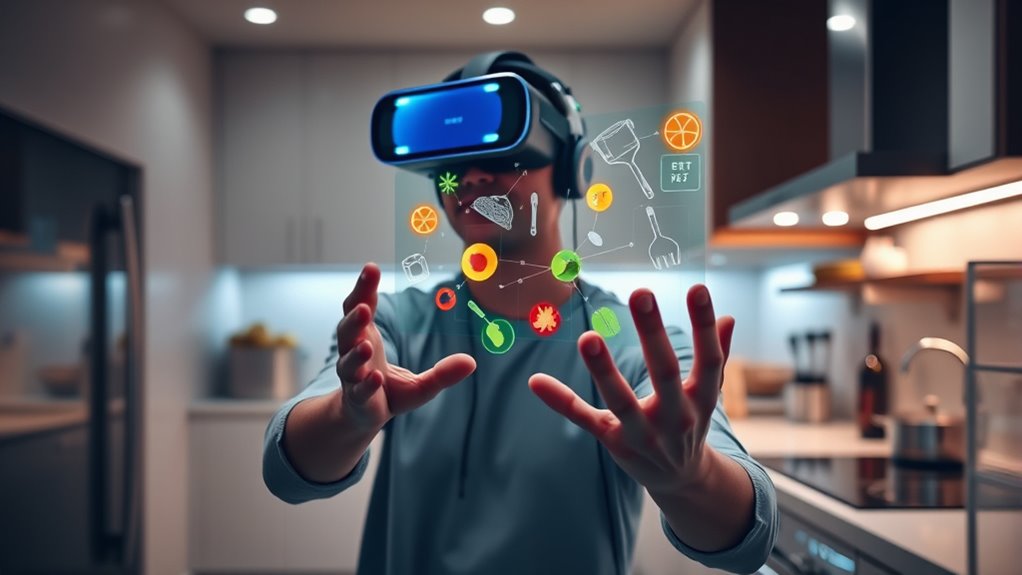

VR headsets are transforming culinary education by offering immersive, interactive experiences that help you learn techniques hands-on. They provide visual cues, step-by-step guidance, and real-time feedback, making cooking more engaging and accessible. While they can enhance skills learned from cookbooks, traditional methods still offer detailed recipes and cultural context. Far from replacing cookbooks entirely, VR technology complements them, offering a richer learning environment. Discover how these tools work together to improve your cooking journey.
Key Takeaways
- VR offers immersive, interactive cooking practice that enhances skills beyond traditional recipes, but doesn’t provide the cultural depth of cookbooks.
- Cookbooks deliver detailed recipes, history, and inspiration, which VR currently cannot fully replace.
- Both methods complement each other, with VR improving technique and cookbooks offering comprehensive context.
- VR technology is evolving to include real-time feedback, but it is unlikely to fully replace the depth and tangibility of cookbooks.
- The future of culinary education likely involves integrating VR with traditional resources rather than replacing cookbooks entirely.
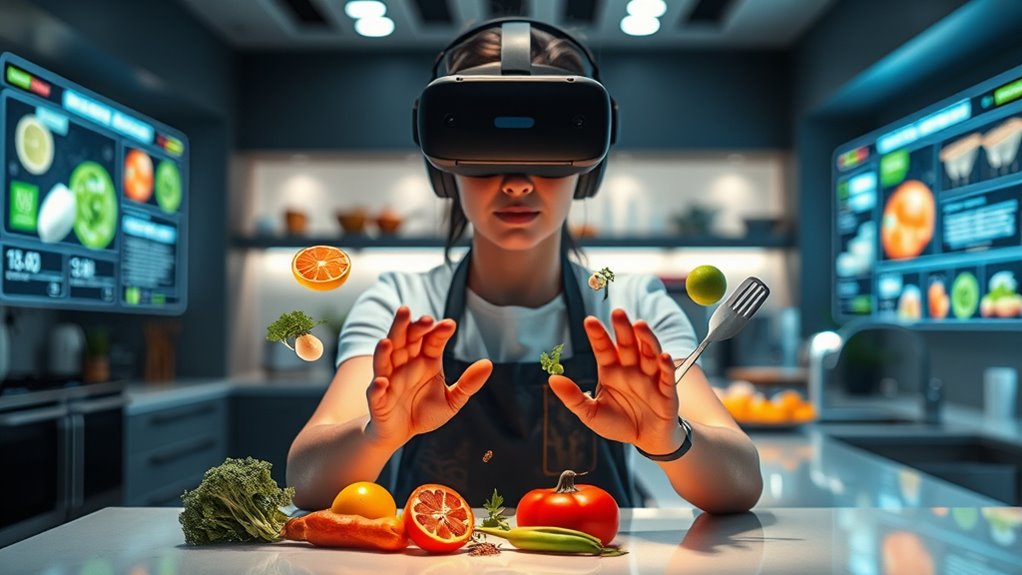
Have you ever wondered how technology is transforming the way we learn to cook? With the rise of virtual reality (VR) and augmented reality (AR), traditional methods like cookbooks are increasingly being challenged. VR cooking classes offer an immersive experience that puts you right in a virtual kitchen, where you can follow step-by-step instructions and practice techniques without any mess or risk. This innovation is reshaping culinary education by making it more interactive, accessible, and engaging. Instead of flipping through pages, you put on a VR headset and instantly find yourself in a realistic kitchen environment, where visual cues guide you through each process. AR takes it a step further by overlaying digital instructions onto your real-world view, so as you cook, you see prompts, timers, or ingredient lists right in your line of sight. This blend of virtual and real-world guidance makes learning more intuitive, especially for beginners who might find cookbooks overwhelming or outdated.
In a way, VR and AR are democratizing culinary education. You no longer need to attend expensive classes or own a large library of cookbooks. Instead, you can access a wide variety of classes and tutorials from your living room, tailored to your skill level or cuisine interest. These tools also allow for hands-on practice in a safe environment, where mistakes don’t lead to wasted ingredients or dinner disasters. As you “virtually” chop, sauté, or bake, you develop muscle memory and confidence that translates into real-world skills. Plus, the immersive nature of VR keeps you engaged, making it easier to retain information compared to traditional reading. It also enables chefs and culinary schools to reach students worldwide, breaking geographical barriers and providing a more personalized learning experience. Additionally, the integration of interactive technology enhances the educational experience by providing real-time feedback and adaptive learning paths.
However, some might wonder if this technological shift could replace cookbooks entirely. While VR offers a dynamic way to learn, cookbooks still hold value—they provide detailed recipes, cultural context, and inspiration that can’t always be captured in a virtual environment. Still, as VR technology continues to evolve, it’s likely to complement rather than replace traditional culinary education methods. You might find yourself flipping through a cookbook for inspiration and then jumping into a VR class to perfect a technique or try a new dish. The future of cooking education looks bright, combining the tactile knowledge of cookbooks with the immersive, interactive potential of VR and AR. Ultimately, these tools are about enhancing your learning journey, making cooking more accessible, enjoyable, and innovative.
Frequently Asked Questions
Can VR Cooking Classes Accommodate Dietary Restrictions?
Yes, VR cooking classes can accommodate dietary restrictions. You can customize recipes through dietary customization features, ensuring ingredients meet your needs. Many platforms allow ingredient substitutions, so you can easily swap out allergens or preferred items. This interactive experience helps you learn tailored cooking techniques, making it easier to follow restrictions while still enjoying delicious, personalized meals in a virtual environment.
How Affordable Are VR Headsets for Everyday Cooks?
VR headsets are more affordable than ever, making them accessible to everyday cooks like you. While the cost comparison varies, entry-level devices often cost less than a fancy dinner out. Compatibility with your existing devices is improving, so you won’t need a whole new setup. Though they’re an investment, many find the immersive cooking experience worth the price, bringing professional-level lessons right into your kitchen without breaking the bank.
Will VR Classes Be Accessible for Visually Impaired Users?
Yes, VR classes can become accessible for visually impaired users. Developers are increasingly incorporating accessibility features like audio descriptions, haptic feedback, and voice commands to help those with visual impairment navigate virtual environments. As technology advances, you’ll find these classes becoming more inclusive, allowing you to enjoy immersive cooking experiences regardless of visual limitations. This progress guarantees that VR cooking can be enjoyable and accessible for everyone.
What Is the Learning Curve for New VR Technology?
The learning curve for new VR technology can be surprisingly smooth if you stay patient and open-minded. User adaptation varies, but most find initial hurdles manageable with simple tutorials. As you become more familiar with controls and interfaces, confidence grows quickly. The suspense lies in how immersive and intuitive the experience becomes—transforming a potentially steep learning curve into a seamless journey, making VR feel like a natural extension of your culinary exploration.
Are There Multiplayer Options for Group Cooking Experiences?
Yes, many VR cooking platforms offer multiplayer options for group collaboration, allowing you to cook with friends or family in real-time. These experiences enhance group dynamics by encouraging communication, teamwork, and shared learning. You can virtually chop, stir, and plate dishes together, making cooking more interactive and fun. Multiplayer VR cooking experiences turn solo efforts into engaging social activities, bringing people closer even when physically apart.
Conclusion
While some worry that VR headsets might replace traditional cookbooks, they actually complement each other. VR offers immersive, hands-on experiences, making cooking more engaging and accessible, especially for beginners. You might think it’s too high-tech or complicated, but once you try it, you’ll see how seamlessly it integrates into your kitchen routine. Ultimately, VR cooking classes enhance your skills without replacing the timeless charm of a good cookbook.