To achieve a perfect crust on your sous vide steak, start by thoroughly drying the meat to prevent steaming. Use a hot pan or grill heated around 500°F (260°C), and select a high-smoke point oil like avocado or clarified butter. Sear each side for about 1-2 minutes until you see a deep, golden-brown crust. Adding aromatics like garlic and herbs during searing boosts flavor. Keep practicing these techniques to master the art of finishing your steak just right.
Key Takeaways
- Pat dry the steak thoroughly to prevent steaming and ensure a crisp, caramelized crust during searing.
- Use a preheated pan or grill at about 500°F (260°C) for rapid, even crust formation.
- Sear each side for 1-2 minutes, flipping gently to develop a deep, golden-brown crust without overcooking.
- Incorporate aromatics like garlic and herbs during searing for added flavor infusion.
- Rest the steak briefly after searing to allow juices to redistribute, maximizing tenderness and flavor.
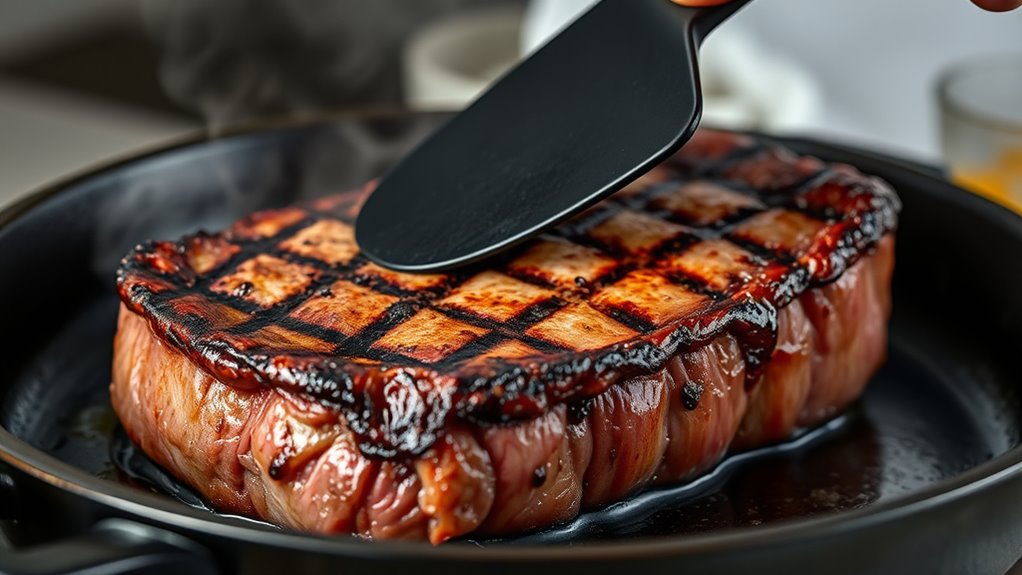
Finishing a steak cooked sous vide is the key step that transforms perfectly tender meat into a flavorful, caramelized masterpiece. The final searing process isn’t just about adding color; it’s about enhancing flavor, texture, and visual appeal. To get the best sear, you need to focus on marbling enhancement and proper vacuum sealing methods. These elements play a vital role in guaranteeing your steak develops a rich crust without sacrificing the juiciness and tenderness achieved during sous vide cooking.
When it comes to marbling enhancement, your goal is to maximize the beef’s intramuscular fat, which melts during the sear, adding flavor and moisture. To do this, consider choosing cuts with good marbling or allowing the steak to rest at room temperature before searing. When you vacuum seal your steak, make sure the process is thorough, removing all excess air. This not only prevents the bag from floating but also promotes even heat transfer during the sous vide process. Proper vacuum sealing methods ensure that the steak is uniformly cooked and that the surface remains in contact with the water bath, which is essential for consistent results.
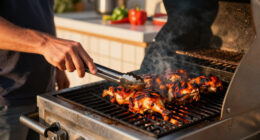
As you move to the searing stage, heat your pan or grill to high. You want it scorching hot—think around 500°F (260°C)—to create that beautiful Maillard reaction. Before placing the steak down, pat it dry with paper towels. Excess moisture can cause steaming rather than searing, which dulls the crust and hampers flavor development. Once in the pan, avoid overcrowding; give each piece space to breathe, allowing the heat to reach all sides evenly. If you’re using a cast iron skillet, add a small amount of high-smoke point oil, like avocado or clarified butter, to prevent sticking and promote a quick, even sear.
Timing is critical. Sear each side for about 1-2 minutes, just long enough to form a deep, golden-brown crust. During this time, you can add aromatics such as garlic, thyme, or rosemary to the pan for flavor infusion. Use tongs to flip the steak gently, ensuring you don’t disturb the crust before it forms. Remember, the goal is a balance—crispy exterior with a tender, juicy interior. Once seared, let the steak rest for a few minutes to redistribute its juices, then serve immediately to enjoy the full spectrum of flavors and textures. The combination of proper vacuum sealing, marbling enhancement, and expert searing guarantees a steak that’s both visually stunning and irresistibly flavorful.
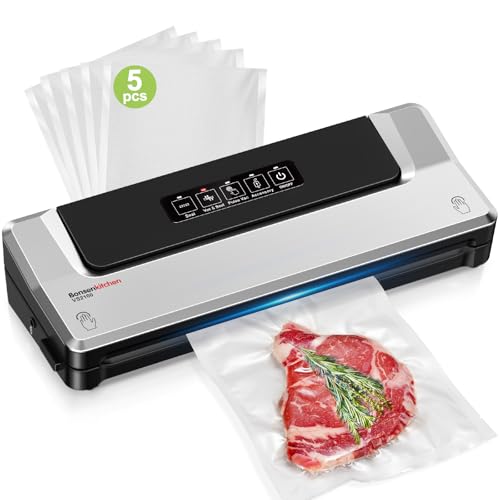
Bonsenkitchen Vacuum Sealer Machine | Compact Food Sealer for Kitchen Storage & Meal Prep | Multiple Modes | External Vacuum System | 5 Bags, Silver
4 Modes : 'Vac & Seal' – one-touch automatic vacuum and seal, perfect for food that does not…
As an affiliate, we earn on qualifying purchases.
As an affiliate, we earn on qualifying purchases.
Frequently Asked Questions
Can I Sear Sous Vide Steak in a Non-Stick Pan?
Yes, you can sear sous vide steak in a non-stick pan. Just make sure to use high heat and proper searing techniques to develop a good crust without damaging the pan. Preheat your non-stick pan thoroughly, add a small amount of oil with a high smoke point, and sear each side for 1-2 minutes. Keep an eye on the heat to avoid sticking or burning the steak.
How Long Should I Let the Steak Rest After Searing?
You should let your steak rest for about 5 to 10 minutes after searing. During this resting time, carryover cooking continues, which helps the juices redistribute throughout the meat, ensuring a tender, flavorful bite. Resting also allows the temperature to stabilize, preventing excess juice loss when you cut into it. Keep the steak loosely tented with foil if desired, but avoid covering it tightly to maintain the crust.
Is It Necessary to Dry the Steak Before Searing?
Think of it as a dry sponge ready to soak up flavor. Yes, you should dry the steak before searing. Moisture removal is key for crust development because excess water prevents a crisp, golden exterior. Pat the steak with paper towels until it’s thoroughly dry, especially on the surface. This step ensures you get that perfect sear without steaming the meat, giving you a beautifully crusted steak every time.
What Type of Oil Is Best for Searing?
You should use a high smoke point cooking oil for searing your steak, like avocado oil, grapeseed oil, or clarified butter. These oils can withstand the high heat needed for a good sear without burning. Avoid oils with low smoke points, like extra virgin olive oil, which can produce smoke and off-flavors. Choosing the right oil guarantees a perfect crust and enhances the flavor of your steak.
Can I Sear Directly From the Refrigerator?
Yes, you can sear your steak directly from the refrigerator. Just be aware that a cold surface may cause uneven searing, so let the steak sit at room temperature for a few minutes if possible. This helps prevent the seasoning from becoming dull and ensures a better crust. A slightly warmer surface will give you a more even sear and enhance the seasoning effects, resulting in a perfect crust.

Lodge Seasoned Cast Iron Skillet 12 Inches – Quality Frying Pan for the Stove, Oven, Grill & Campfire – Includes Silicone Hot Handle Holder – Non-Toxic, Nonstick & Long-Lasting
Versatile Cooking Skillet: The Lodge Cast Iron Skillet is a multipurpose, everyday cooking pan that excels at searing,…
As an affiliate, we earn on qualifying purchases.
As an affiliate, we earn on qualifying purchases.
Conclusion
Now that you’ve mastered searing your sous vide steak, you’re just steps away from a perfect crust. Did you know that a proper sear can add up to 50% more flavor and texture to your meat? So, don’t rush it—patience pays off with that irresistible, caramelized crust. With these techniques, you’ll impress every time, turning simple ingredients into a restaurant-quality masterpiece right in your own kitchen. Happy cooking!

Algae Cooking Club Chef-Grade 100% Algae Cooking Oil – Avocado Oil Alternative – 535°F High Smoke Point – Omega-9 Rich, Neutral Buttery Flavor – Seed Oil-Free – For Searing, Baking, Frying (16 fl oz)
Light Buttery Flavor That Elevates Every Meal: Algae Cooking Club Chef-Grade Algae Oil enhances every dish with subtle…
As an affiliate, we earn on qualifying purchases.
As an affiliate, we earn on qualifying purchases.
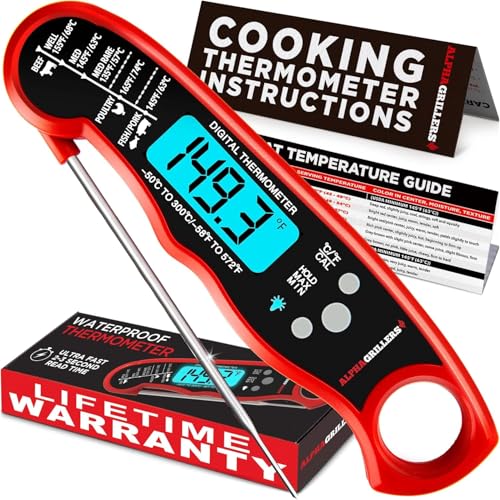
Alpha Grillers Meat Thermometer Digital – Instant Read Food Thermometer for Cooking & Grilling – Professional Kitchen Birthday Gifts for Men, Him, Dad, Husband, Boyfriend
Instant Read Food Thermometer | Our instant read thermometer features a temperature probe and advanced, highly accurate technology…
As an affiliate, we earn on qualifying purchases.
As an affiliate, we earn on qualifying purchases.