
To guarantee your kitchen thermometer provides accurate readings, regularly test it using the ice water or boiling water method. Adjust the calibration if it shows incorrect temperatures to prevent undercooked or unsafe food. Keep checking your thermometer, especially after drops or extreme use, and follow manufacturer instructions. Proper calibration helps you cook safely and consistently. Continue exploring ways to maintain your thermometer’s accuracy for perfect results every time.
Key Takeaways
- Regularly test thermometers using ice water (32°F/0°C) and boiling water (212°F/100°C at sea level) to verify accuracy.
- Ensure the sensing part is fully submerged without touching sides or bottom during calibration tests.
- Adjust thermometer readings according to manufacturer instructions if they deviate from standard temperatures.
- Recalibrate after drops, extreme temperature exposure, or if readings seem inconsistent.
- Proper calibration and maintenance ensure safe, accurate cooking and food safety standards at home.

Ensuring your kitchen thermometer provides accurate readings is essential for safe and successful cooking. When you’re preparing meals, especially those that require precise temperatures like meats, seafood, or dairy, relying on an uncalibrated thermometer can lead to undercooked or overcooked dishes. Not only does this compromise food safety, increasing the risk of foodborne illnesses, but it also impacts the quality and texture of your food. Regularly testing and calibrating your thermometer is a simple yet vital step in equipment maintenance that keeps your cooking consistent and safe.
Food safety is the top priority, and a thermometer that isn’t properly calibrated can mislead you into thinking your food has reached the necessary temperature when it hasn’t. By verifying the accuracy of your thermometer periodically, you ensure that you’re not unintentionally serving undercooked poultry or seafood, which can carry harmful bacteria. Calibration is especially important if you notice inconsistent readings or if your thermometer has been dropped or exposed to extreme temperatures. Proper equipment maintenance means you’re not only extending the lifespan of your thermometer but also safeguarding your health and that of your family.
Regularly verify your thermometer’s accuracy to ensure safe, properly cooked meals and protect your family’s health.
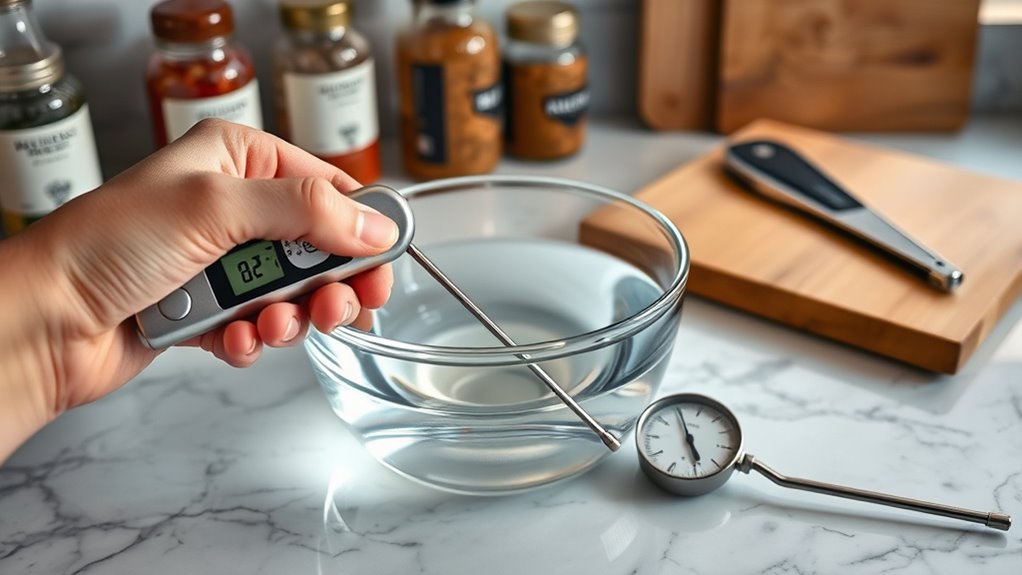
Testing your kitchen thermometer is straightforward and doesn’t require special tools. One common method involves using the ice water test: fill a glass with ice, add a bit of water, and stir. Let it sit for a couple of minutes until the ice melts, then insert your thermometer into the mixture, ensuring the sensing area is submerged without touching the sides or bottom of the glass. The thermometer should read 32°F (0°C). If it doesn’t, you’ll need to calibrate it. Another reliable method is the boiling water test: boil a pot of water and insert the thermometer once the water reaches a rolling boil. It should read 212°F (100°C) at sea level. If it doesn’t, adjustments are necessary, especially if you live at a higher altitude where boiling points are lower.
Understanding the contrast ratio of your thermometer or other kitchen equipment can also help you select tools that provide clearer readings in various lighting conditions, ensuring your measurements are accurate regardless of ambient lighting. Always consult the manufacturer’s instructions for specific guidelines, as improper calibration can lead to inaccurate readings. Keep in mind that calibration isn’t a one-time task; it’s best to check your thermometer regularly, especially before large cooking projects or if you notice inconsistent readings.

Rattleware 5-Inch Dial Thermometer Kit, Stainless Steel Easy Steam Probe with 1.75-Inch Dial NSF Approved Calibration Tool and Adjustable Clip for Barista Milk Temperature Control
𝐃𝐔𝐑𝐀𝐁𝐋𝐄 𝐁𝐔𝐈𝐋𝐃 𝐀𝐍𝐃 𝐒𝐈𝐌𝐏𝐋𝐄 𝐂𝐀𝐋𝐈𝐁𝐑𝐀𝐓𝐈𝐎𝐍: The milk thermometer is built to withstand daily cafe use and frequent cleaning….
As an affiliate, we earn on qualifying purchases.
As an affiliate, we earn on qualifying purchases.
Frequently Asked Questions
How Often Should I Recalibrate My Kitchen Thermometer?
You should recalibrate your kitchen thermometer at least once a year to maintain accurate readings, considering its lifespan and usage frequency. If you notice inconsistent temperatures or after dropping it, recalibration is essential. Regular calibration ensures your thermometer stays precise, helping you cook safely and effectively. Keep in mind, proper care extends its lifespan, so check it periodically, especially before important cooking tasks or when it’s been used extensively.
Can I Calibrate Digital and Analog Thermometers the Same Way?
Yes, you can calibrate digital and analog thermometers similarly. For digital calibration, you’ll often use water baths at specific temperatures and follow the manufacturer’s instructions. For analog accuracy, you might do the same or compare readings with a known accurate thermometer. Both types benefit from regular calibration to guarantee precise readings, and using the same calibration methods helps keep your kitchen thermometer measurements reliable.
What Signs Indicate My Thermometer Needs Replacement?
When your thermometer’s readings become inconsistent despite regular calibration, it’s time for a replacement. Think of it as a trusted compass losing its direction. Typically, a thermometer’s lifespan is around a year or two, depending on usage. If you notice slow responses or erratic results, it’s a sign to replace it rather than calibrate again. Regular calibration helps, but don’t ignore the signs that your device has reached its end.
Is It Safe to Use Boiling Water for Calibration?
Yes, using boiling water for calibration is safe and effective because it provides a consistent 212°F (100°C) reference point at sea level. To guarantee calibration safety, handle hot water carefully and avoid splashing. Make sure your thermometer is designed for high temperatures, and always use oven mitts or tongs when immersing it. This method helps you verify your thermometer’s accuracy without risking damage.
How Do Environmental Factors Affect Thermometer Accuracy?
Environmental factors like humidity effects and ambient temperature can markedly impact your thermometer’s accuracy. High humidity can cause condensation, leading to false readings, while extreme ambient temperatures can skew measurements if the thermometer isn’t designed for those conditions. Always store your thermometer in a dry, stable environment and allow it to reach room temperature before testing or use. This helps guarantee your readings stay precise and reliable.
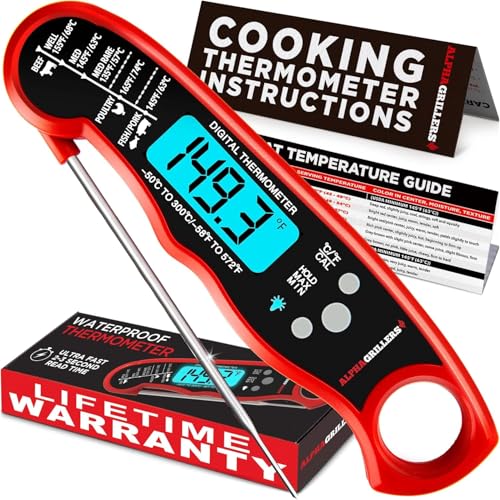
Alpha Grillers Meat Thermometer Digital – Instant Read Food Thermometer for Cooking & Grilling – Professional Kitchen Birthday Gifts for Men, Him, Dad, Husband, Boyfriend
Instant Read Food Thermometer | Our instant read thermometer features a temperature probe and advanced, highly accurate technology…
As an affiliate, we earn on qualifying purchases.
As an affiliate, we earn on qualifying purchases.
Conclusion
Think of your kitchen thermometer as a loyal compass guiding your culinary adventures. When you regularly test and calibrate it, you make certain your cooking journey stays on course, avoiding the treacherous waters of undercooked or burnt dishes. Just like a compass needs checking to stay true, your thermometer needs calibration to serve you well. Keep it accurate, and your kitchen will always be a safe harbor for delicious, perfectly cooked meals.
Alpha Grillers Meat Thermometer Digital – Instant Read Food Thermometer for Cooking & Grilling – Professional Kitchen Birthday Gifts for Men, Him, Dad, Husband, Boyfriend
Instant Read Food Thermometer | Our instant read thermometer features a temperature probe and advanced, highly accurate technology…
As an affiliate, we earn on qualifying purchases.
As an affiliate, we earn on qualifying purchases.

BOMATA Digital Water Thermometer for Water, Liquid, Candle and Cooking. Instant Read Food Thermometer Waterproof IPX7 with Long Probe for Cooking, Meat, BBQ! T101 (Black Color)…
[ Waterproof – IPX7 ] With the strong waterproof ability, it’s very suitable for measuring the temperature of…
As an affiliate, we earn on qualifying purchases.
As an affiliate, we earn on qualifying purchases.