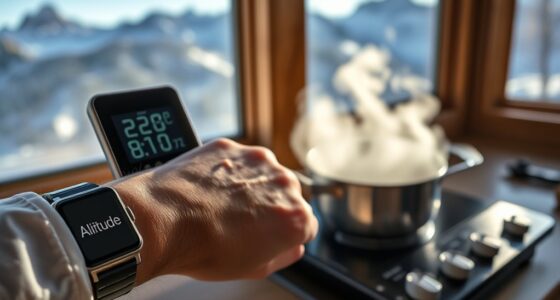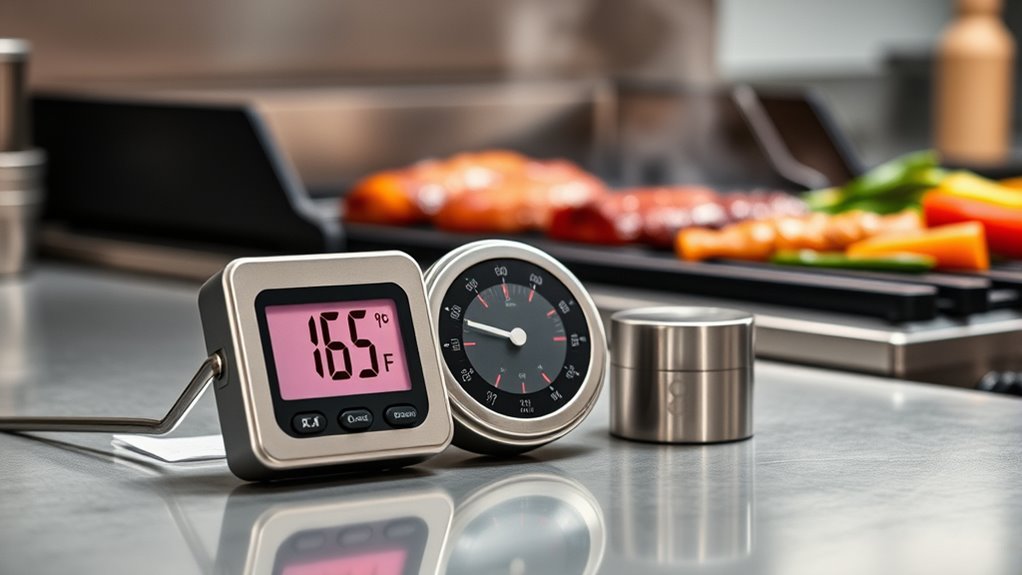

Using timers and thermometers is key to safe cooking. They help you control how long and at what temperature food is cooked, preventing undercooking that can cause illness. Digital tools alert you when food reaches safe internal temperatures, giving you confidence in your meals. Proper use minimizes bacteria risks and ensures even cooking. Keep exploring how these tools improve safety and how to best incorporate them into your kitchen routines.
Key Takeaways
- Digital timers and thermometers help ensure meats and seafood are cooked to safe internal temperatures, preventing foodborne illnesses.
- These devices alert users at precise cooking stages, reducing undercooking or overcooking risks.
- Proper use of timers and thermometers enhances food handling practices and overall kitchen safety.
- They support even heat distribution and proper temperature maintenance, minimizing bacteria survival zones.
- Integrating user-friendly tech tools boosts confidence, reduces human error, and improves meal safety and quality.

Have you ever wondered how technology is transforming food safety? In today’s smart kitchen, food technology plays a *crucial* role in *guaranteeing* your meals are safe and delicious. With innovative tools like digital timers and precise thermometers, you can take control of cooking temperatures and times, reducing the risk of foodborne illnesses. These advancements aren’t just gadgets; they’re part of a broader movement toward smarter, safer home cooking. Using these devices effectively helps you maintain proper food handling practices, making sure your meals reach the right internal temperatures and are cooked thoroughly.
Food technology ensures safer, more reliable home cooking with precise timers and thermometers.
A smart kitchen setup often includes appliances and accessories designed to enhance food safety. Digital timers are a simple yet *indispensable* element, allowing you to set exact cooking durations. When you’re preparing meats, seafood, or even leftovers, timing is *paramount* to prevent undercooking or overcooking. A timer ensures you’re alerted at the precise moment when your food reaches its ideal cooking point. Coupled with food technology, these timers can sync with your smartphone or kitchen appliances, giving you real-time updates and reminders, even when you’re multitasking. This integration helps you stay vigilant and avoid the common mistake of forgetting about food on the stove or in the oven.
Thermometers are equally *essential* in a smart kitchen. They provide real-time, accurate temperature readings, so you know exactly when your food hits the safe zone. Food technology has introduced digital and wireless thermometers that can be left in the food during cooking, sending alerts directly to your device. This means you don’t have to open the oven repeatedly, losing heat and disrupting the cooking process. Proper temperature control is especially important when preparing poultry, beef, or reheated leftovers, where undercooking can lead to health issues. By using these tools properly, you minimize the chance of foodborne pathogens surviving, *ensuring* each meal is both safe and enjoyable.
In addition, understanding the science behind heat distribution and how different materials affect cooking can help you choose the right tools for safe food preparation. Kitchen science explains why certain cookware heats more evenly, reducing cold spots that can harbor bacteria or cause uneven cooking, further supporting food safety. Embracing food technology in your kitchen transforms the way you cook, making it safer and more efficient. These tools give you greater confidence and control, reducing guesswork and human error. They also encourage better habits, like checking temperatures regularly and sticking to recommended cooking times. As smart kitchen devices become more accessible and user-friendly, integrating timers and thermometers into your routine is easier than ever. Ultimately, leveraging these innovations not only protects your health but also elevates your cooking experience, turning everyday meals into safer, more reliable creations.
Frequently Asked Questions
How Often Should I Calibrate My Kitchen Thermometer?
You should calibrate your kitchen thermometer at least once a year to guarantee thermometer accuracy. Additionally, calibrate it whenever you notice inconsistent temperature readings or after dropping it. Regular calibration helps maintain precise measurements, which is vital for safe cooking. Keep a schedule for calibration, especially if you use it frequently or in demanding cooking situations. This way, you can trust your thermometer’s readings and guarantee food safety every time.
Are Digital Timers More Reliable Than Traditional Mechanical Timers?
Digital timers are generally more reliable than mechanical timers because they offer better digital accuracy, ensuring precise timing for your cooking. They often feature clear displays and adjustable settings, reducing errors. However, mechanical timers are more durable and less prone to electronic failure, making them a good backup. Your choice depends on whether you prioritize accuracy and ease of use or durability, but either way, both can help you cook safely.
Can Smartphone Apps Replace Physical Timers and Thermometers?
Smartphone apps can be a handy tool in your kitchen, but they can’t fully replace physical timers and thermometers. While many apps boast impressive features and decent accuracy, they depend on your phone’s hardware and environmental factors. Think of them as a Swiss Army knife—useful, but not always the best tool for precise food safety. Rely on dedicated devices for accuracy, especially when monitoring temperatures or timing critical steps.
What’s the Best Way to Clean and Maintain Food Thermometers?
To keep your food thermometer in top shape, follow proper cleaning procedures after each use. Wash it with warm, soapy water and avoid submerging the entire device if it’s not waterproof. Dry it thoroughly and store it in a clean, dry place. Regular maintenance tips include calibrating the thermometer periodically and checking for damage. This guarantees accurate readings, helping you cook safely and maintain your equipment‘s longevity.
How Do I Choose the Right Thermometer for Different Foods?
Choosing the right thermometer is like selecting a superhero gadget for your kitchen! For precise cooking techniques, get an instant-read thermometer for quick checks, perfect for steaks or baked goods. Use an oven-safe probe thermometer for roasts or poultry, ensuring accurate internal temperatures. Ingredient-specific thermometers, like candy or deep-fry thermometers, help you master sweet treats or crispy fries. Pick the one that fits your cooking style to guarantee perfectly safe and delicious results every time!
Conclusion
Think of your kitchen as a battlefield where timers and thermometers are your trusted allies. Just like a skilled captain relies on sensors to navigate treacherous waters, using these tools guarantees your food reaches safe temperatures every time. I once forgot to check my chicken, only to find it undercooked—like sailing into storms unprepared. With tech by your side, you turn cooking into a safe voyage, steering clear of foodborne hazards with confidence.