If you want quick, hands-free guidance while cooking, Alexa voice commands are your best choice. They let you control timers, recipes, and music without interrupting your flow, especially when your hands are dirty. If you prefer detailed, customizable recipes and step-by-step instructions, cooking apps are better suited. Combining both options can give you convenience and depth. Keep exploring to discover how to optimize your kitchen setup even further.
Key Takeaways
- Alexa offers quick, hands-free voice commands ideal for multitasking and messy situations in the kitchen.
- Cooking apps provide detailed, customizable recipes, step-by-step instructions, and multimedia content for complex dishes.
- Voice control minimizes physical device interaction, maintaining cleanliness and focus during meal prep.
- Apps allow precise control over recipes, servings, and nutritional info, enhancing personalization.
- Combining both tools maximizes convenience, efficiency, and content depth for an optimal cooking experience.
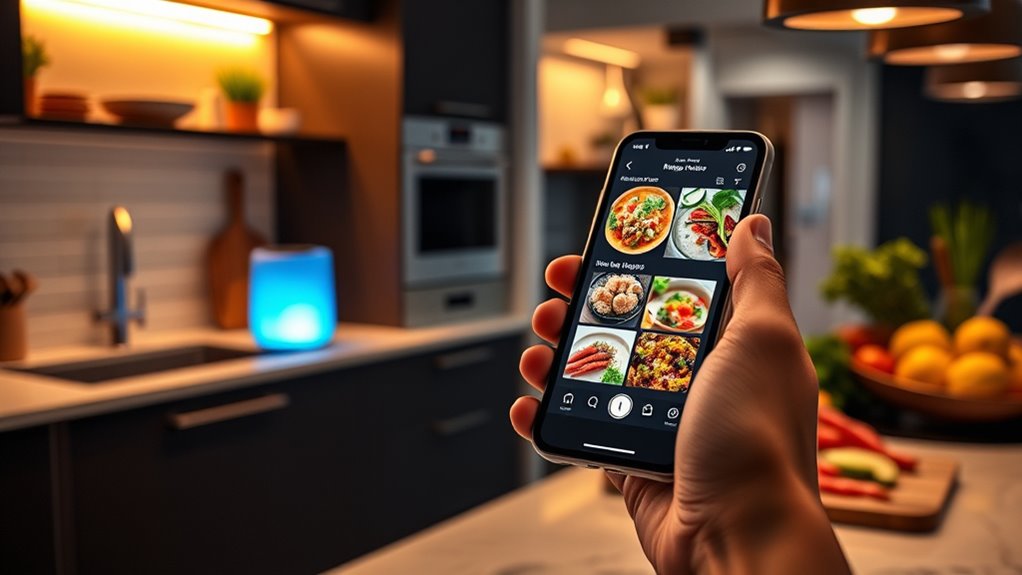
When it comes to cooking, choosing between voice assistants like Alexa and dedicated apps can considerably impact your experience in the kitchen. If you prioritize hands free convenience, Alexa offers a significant advantage. With a simple voice command, you can ask Alexa to read recipes aloud, set timers, adjust volume, or even add ingredients to your shopping list—all without touching your device. This allows you to keep your hands free for chopping, stirring, or other tasks, making your workflow more efficient and less messy. Voice control minimizes interruptions, so you don’t have to stop what you’re doing to find your device or tap on a screen. Plus, Alexa’s ability to respond instantly makes it ideal when you’re multitasking or working with messy ingredients.
Using Alexa hands free keeps your focus on cooking, making prep easier and mess-free.
On the other hand, dedicated cooking apps often provide extensive app customization options that can enhance your culinary experience. When you use apps, you can select specific recipes, customize serving sizes, and adjust ingredient quantities effortlessly. Many apps allow you to save favorite recipes, create shopping lists, and even access detailed nutritional information. This level of customization can help you tailor your cooking experience to your preferences and dietary needs. Moreover, apps often include step-by-step instructions, photos, and videos, which can be especially helpful if you’re trying a new dish. You can pause, rewind, or skip steps at your own pace, giving you more control over your cooking process. Additionally, the integration of high-quality visuals and detailed instructions can improve your overall understanding and execution of complex recipes.
While voice assistants excel in offering quick, hands free guidance, apps shine when it comes to depth and personalization. If you prefer a seamless, voice-activated experience that keeps your hands free for cooking, Alexa is a solid choice. It reduces the need to touch screens or pick up devices, which is particularly useful when your hands are dirty or full. Conversely, if you enjoy exploring detailed recipes, making adjustments, or planning meals more precisely, dedicated apps are better suited to your needs. They give you the flexibility to customize your experience and access extensive content at your own pace.
Ultimately, your choice depends on how you cook and what features matter most to you. Some cooks even combine both tools—using Alexa for quick commands and hands free assistance, and apps for in-depth recipe management. Whichever you choose, integrating voice or app technology can make your time in the kitchen more enjoyable, efficient, and tailored to your cooking style. Recognizing the importance of high-quality projector technology can also enhance your overall kitchen or entertainment setup, making your environment more versatile and enjoyable.

Amazon Echo Dot (newest model) – Vibrant sounding speaker, Designed for Alexa+, Great for bedrooms, dining rooms and offices, Charcoal
Your favorite music and content – Play music, audiobooks, and podcasts from Amazon Music, Apple Music, Spotify and…
As an affiliate, we earn on qualifying purchases.
As an affiliate, we earn on qualifying purchases.
Frequently Asked Questions
Can Alexa Provide Personalized Cooking Recommendations?
Yes, Alexa can provide personalized cooking recommendations. In your smart kitchen, it uses voice commands to suggest recipes based on your preferences and available ingredients. Alexa learns your tastes over time, offering recipe personalization that fits your dietary needs and cooking habits. By integrating Alexa into your cooking routine, you get tailored guidance effortlessly, making meal prep quicker and more enjoyable without needing to touch a screen.
Are Voice Commands More Accurate Than Touch Inputs?
Think of voice recognition as a seasoned chef who can understand you amidst noise, while touch precision is like a delicate pastry with fine detail. Generally, voice commands are less accurate than touch inputs because background noise can interfere. Yet, advances improve voice recognition daily. You might find voice works well for quick commands, but for precise tasks, touch inputs often deliver better accuracy, ensuring your cooking stays on track.
Do Cooking Apps Offer Better Nutritional Information?
Cooking apps typically offer more detailed and accurate nutritional information than voice assistants, making them better for meal prep and tracking your intake. You can easily access nutrition labels, ingredient details, and even share recipes with friends. Apps allow for thorough research and adjustments, giving you a clearer picture of what you’re eating. Voice assistants are convenient, but for precise nutrition data, apps are the smarter choice.
Is Using Alexa Safer Than Handling a Device While Cooking?
Using Alexa offers a subtle elegance in the kitchen, providing hands-free convenience that minimizes device contamination risks. This approach keeps your focus on cooking without the worry of handling devices with messy hands. By relying on voice commands, you reduce accidental drops or spills, making it safer overall. So, if safety matters to you, Alexa’s voice-controlled guidance enhances your cooking experience while keeping your devices pristine.
Which Method Is More Accessible for Users With Disabilities?
Using Alexa is more accessible for users with disabilities because it offers better visual accessibility and physical ease. You can simply ask questions without needing to see or touch a screen, making it ideal if you have limited vision or mobility issues. With voice commands, you avoid physical strain and get instant guidance, while apps may require more visual interaction and fine motor skills, making Alexa a more inclusive choice.

iPhone User Interface Cookbook
As an affiliate, we earn on qualifying purchases.
As an affiliate, we earn on qualifying purchases.
Conclusion
So, whether you find yourself reaching for Alexa during a busy dinner or tapping through an app in a quiet moment, it’s all about what works for you. Sometimes, I’ve caught myself asking Alexa for help while juggling ingredients, only to realize the app’s step-by-step photos would’ve been perfect. In the end, it’s funny how these tools seem to show up just when you need them most — like they’re always on your side in the kitchen.

Smart AI Glasses with 80MP HD Camera, 1080P Video, Bluetooth/Wi-Fi, Voice Control & AI Recognition – Lightweight Hands-Free Glasses for Photography, Recording & Translation(T6 Polarized Lense)
📹 1080P HD Hands-Free Recording – Capture life’s moments in crystal clarity with the 500W camera and built-in…
As an affiliate, we earn on qualifying purchases.
As an affiliate, we earn on qualifying purchases.

Ninja FlexFlame ProConnect Grill & Smoker | 5-in-1 Smart Cooking System | Electric & Propane | App-Connected | 3-Burner Digital Control | Roast, Griddle & Pizza Maker | Black/Gold | PG305
PRO-CONNECTIVITY: Monitor and adjust your temperatures from your phone and get notifications on your food status, exact temperatures,…
As an affiliate, we earn on qualifying purchases.
As an affiliate, we earn on qualifying purchases.