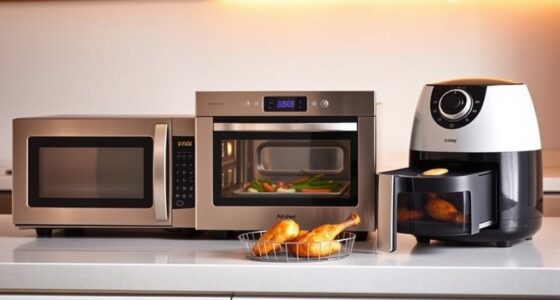
Many people choose to go analog because smart appliances raise privacy concerns, exposing your personal data to hacking and unauthorized access. They can also become vulnerable to cyberattacks, risking both security and functionality. Plus, these devices often overcomplicate simple routines, adding unnecessary energy consumption and frustration. If you prefer control, privacy, and simplicity, sticking to traditional appliances might be the better choice. Keep exploring to discover more about why many are embracing the analog life.
Key Takeaways
- Privacy concerns arise from data collection and potential hacking, prompting some to prefer offline, analog devices.
- Cybersecurity risks and device vulnerabilities make connected appliances more susceptible to hacking and disruptions.
- Analog appliances consume less energy and avoid constant power use associated with smart features.
- Simpler, traditional devices reduce complexity, troubleshooting, and reliance on internet connectivity.
- Nostalgic and tactile experiences with analog appliances foster a stronger sense of control and privacy.

Despite the rise of smart appliances equipped with endless features and connectivity, many consumers are rediscovering the simplicity and reliability of analog devices. While these modern gadgets promise convenience, they often come with hidden drawbacks. Privacy concerns top the list. Every time you connect a smart appliance to the internet, you risk exposing personal data. Manufacturers collect usage patterns, voice commands, and even behavioral insights, which can be vulnerable to hacking or unauthorized access. This constant data exchange can feel intrusive, making you wary of what information might be stored or shared without your explicit consent. Unlike traditional appliances, which operate offline and don’t transmit personal data, analog devices give you peace of mind, knowing your routines stay private. Additionally, the reliance on internet connectivity can make smart appliances vulnerable to cybersecurity threats, risking your personal information and device functionality. Energy consumption is another critical issue with smart appliances. Many of these devices are designed to be always connected, constantly communicating with servers or other gadgets. This connectivity leads to increased energy use that adds up over time. You might think that a smart refrigerator or washing machine saves energy through optimized operation, but the reality often differs. These devices require continuous power for updates, monitoring, or remote control features, which can considerably raise your electricity bill. In contrast, analog appliances are straightforward: they do their job without needing to stay online. They consume energy only when actively used, making them more efficient and eco-friendly in the long run. Furthermore, some people find that smart appliances complicate daily routines instead of simplifying them. Instead of a quick, straightforward task like turning on a toaster or setting a timer on a microwave, you may find yourself steering through apps, troubleshooting connectivity issues, or waiting for firmware updates. This added complexity can be frustrating, especially when these devices malfunction or lose connection. Analog devices, on the other hand, operate with familiar mechanisms and require minimal maintenance, giving you control without the dependency on technology that can fail or cause delays. There’s also a nostalgic appeal to going back to basics. Many appreciate the tactile experience of analog appliances, feeling more connected to their home environment. With fewer features to distract or complicate, you can focus on the task at hand, enjoying a sense of reliability and control. By choosing simple, non-connected devices, you’re not just avoiding privacy breaches and unnecessary energy drain; you’re reclaiming a sense of independence and trust in the appliances you rely on daily. For many, this return to analog isn’t just about practicality; it’s about reclaiming peace of mind in an increasingly connected world.
Frequently Asked Questions
How Do Smart Appliances Impact Data Privacy?
Smart appliances impact your data privacy by collecting and transmitting personal information, which raises privacy concerns. You might not always be aware of how your data is used or protected, risking breaches or unauthorized access. This affects your data security, making it essential to scrutinize device permissions and manufacturer policies. Being cautious with smart appliances helps you maintain control over your privacy and safeguard your sensitive information.
Are There Cost Differences Between Smart and Analog Appliances?
Think of smart appliances as high-tech sports cars and analog ones as reliable trucks. The cost comparison shows smart devices often come with a higher price tag upfront, which raises affordability concerns. While they promise convenience and advanced features, they can also lead to ongoing expenses for updates and subscriptions. If budget is a priority, you might find analog appliances more budget-friendly, offering simplicity without the extra costs.
Can Smart Appliances Be Easily Repaired or Maintained?
Smart appliances can be challenging to repair or maintain because DIY repairs are often limited by hardware restrictions. You might find it difficult to fix issues on your own since many components are sealed or require specialized tools. Additionally, hardware limitations can make troubleshooting tough, and you may need professional help, which can be costly. This complexity can leave you feeling frustrated when trying to keep your smart appliance in top shape.
What Are the Environmental Implications of Smart Appliance Production?
Ever wondered about the environmental impact of smart appliances? Their production involves a complex supply chain and resource extraction, which can lead to habitat destruction, increased carbon emissions, and resource depletion. These devices often require rare materials and energy-intensive manufacturing processes, raising concerns about sustainability. As you consider adopting smart tech, think about how responsible sourcing and recycling can help mitigate these environmental issues.
How Do Smart Appliances Affect Energy Consumption?
Smart appliances can improve your energy efficiency by optimizing their operation based on your usage patterns, saving you money and reducing waste. However, they can also increase overall energy consumption if users rely too heavily on automation, leading to unnecessary use or overuse. Your behavior plays a vital role; being mindful of settings and usage habits helps maximize benefits and minimizes potential energy drain from these devices.
Conclusion
So, step away from the screen, seize your sovereignty, and savor the simplicity. Choosing charm over chiptune, authenticity over automation, you reclaim control and comfort. Let go of gadgets that govern your life and embrace the authentic, analog allure. By boldly breaking free from the digital dazzle, you discover a deeper, more genuine connection to the world around you. Take charge, turn off, and relish the reassuring rhythm of a truly tangible life.