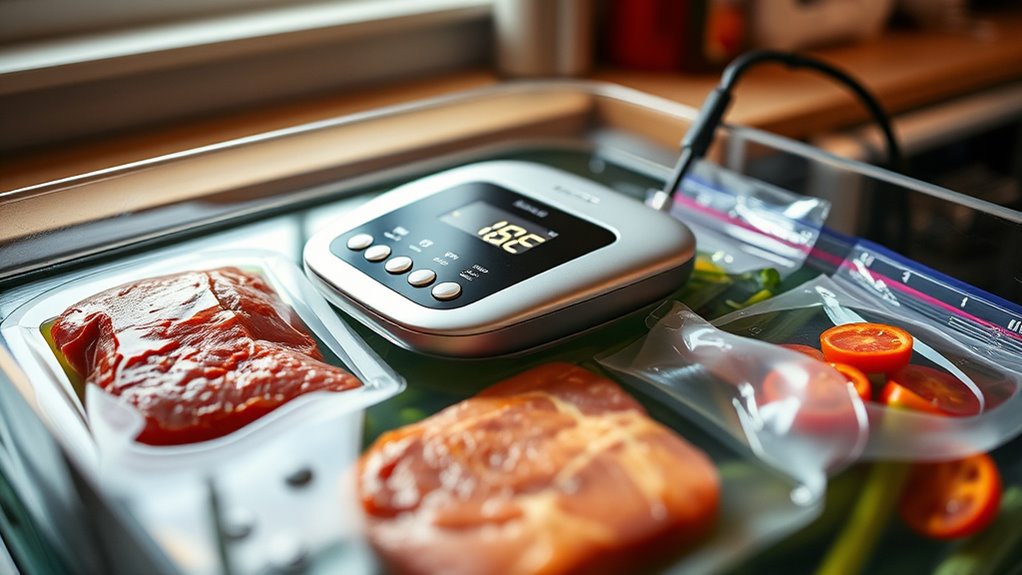

Sous vide is a precise cooking method where you use a temperature-controlled water bath to cook food evenly and retain flavor. You seal your ingredients in vacuum bags, set the right temperature based on your desired doneness, and let the water do the work. This method offers consistent results, tenderness, and excellent flavor infusion. To master it, you’ll want to understand essential equipment, safe handling, and ideal techniques—something you’ll discover more about as you explore deeper.
Key Takeaways
- Sous vide is a precise cooking method that uses temperature-controlled water baths to ensure consistent doneness.
- Essential equipment includes an immersion circulator, vacuum sealer, and suitable water bath containers.
- Proper food preparation involves vacuum sealing and setting accurate temperatures based on desired results.
- Troubleshooting tips include maintaining water levels, sealing bags tightly, and adjusting cook times for thickness.
- Benefits include improved flavor, texture, safety, and the ability to prepare meals with minimal effort.
Understanding How Sous Vide Works
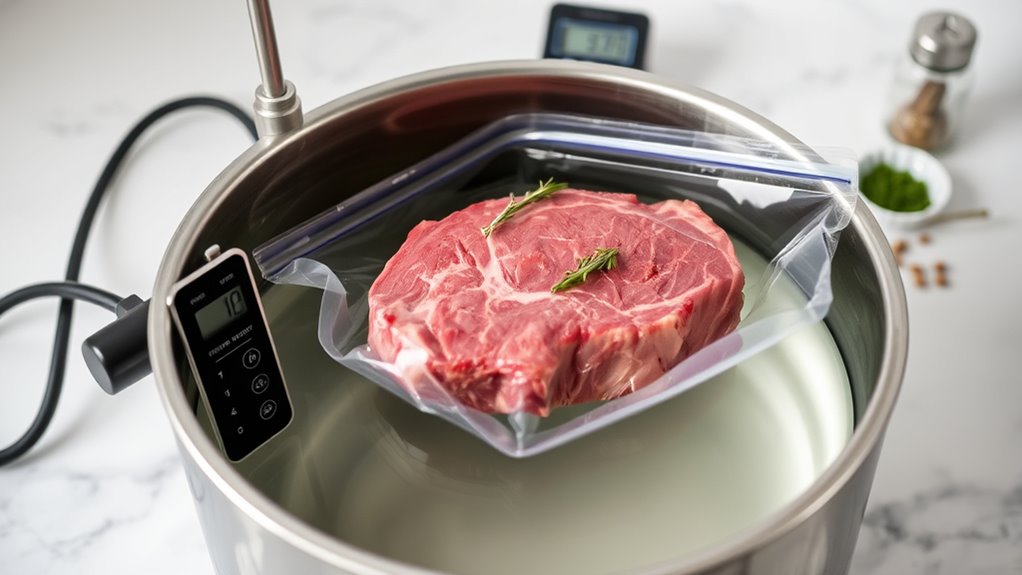
Sous vide works by cooking food slowly and precisely in a temperature-controlled water bath. This method guarantees even cooking, maintaining the exact temperature needed for your dish. Food safety is a key benefit, as cooking at consistent, controlled temperatures reduces the risk of harmful bacteria growth. To maximize safety, you should vacuum seal your food before submerging it in the water bath. Vacuum sealing removes air, preventing bacteria from contaminating the food and helping it cook evenly. This process also preserves flavors and moisture, resulting in tender, flavorful dishes. Proper sealing techniques are essential for optimal results and safety in sous vide cooking. Incorporating food safety practices enhances the reliability of this cooking method and ensures your meals are both delicious and safe to eat. Additionally, understanding portable water bath options can improve your cooking setup if you want to cook outdoors or away from traditional kitchens. For optimal results, choosing the right temperature control device is crucial for maintaining precise water temperature throughout cooking. Implementing temperature regulation can further improve cook consistency and safety.
Essential Equipment for Sous Vide Cooking

To achieve perfect results with sous vide, having the right equipment is key. First, a reliable immersion circulator ensures precise water temperature and consistent water circulation, which is crucial for even cooking. Second, a vacuum sealer creates airtight seals, locking in flavors and moisture while preventing water from entering the bag. Third, a sturdy container or water bath is essential for holding the water and equipment securely. These tools work together to deliver tender, flavorful dishes every time. Proper water circulation prevents hot spots and uneven cooking, making the immersion circulator indispensable. Without proper water circulation, your food may cook unevenly, and without vacuum sealing, flavors can escape or spoil. Investing in quality equipment makes sous vide easier and more rewarding, bringing restaurant-quality results into your kitchen with confidence. For optimal performance, using proper venting and clearances helps prevent safety issues and ensures the equipment operates efficiently. Additionally, choosing the right container size and shape can improve water circulation and overall cooking outcomes. Regular maintenance and cleaning of your equipment also extend its lifespan and maintain optimal performance. Incorporating the right accessories and understanding their compatibility with your setup can further enhance your sous vide experience.
Preparing Food for Sous Vide
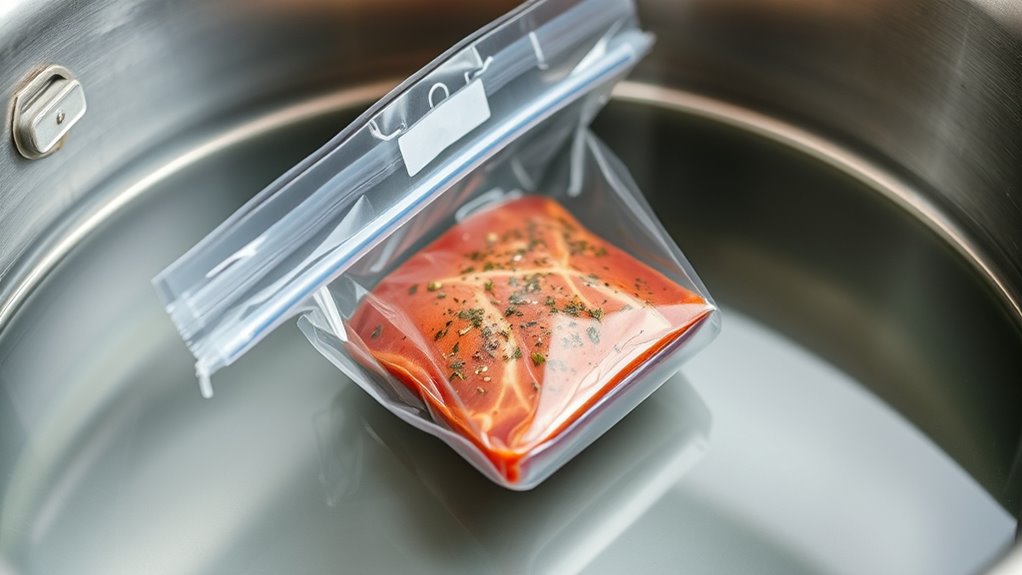
Before cooking your food sous vide, proper preparation is essential to guarantee ideal results. Start by choosing marinade options that enhance flavor without adding excess liquid, as vacuum sealing is key. Whether you prefer a simple herb marinade or a more complex spice blend, make sure your ingredients are evenly coated and well-mixed. When it comes to storage methods, vacuum sealing is the most effective way to remove air and create a tight seal, which helps maintain freshness and ensures even cooking. If you don’t have a vacuum sealer, use high-quality zip-top bags and the water displacement method to push out air. Properly prepared and stored food will cook evenly and retain moisture, setting the stage for perfect sous vide results. Halal culinary traditions can also influence your choice of marinades and ingredients, ensuring your dishes are both flavorful and compliant with halal standards. Incorporating proper food handling practices further enhances safety and quality during the sous vide process. Additionally, understanding food safety guidelines helps prevent contamination and ensures a safe cooking experience. Moreover, paying attention to temperature control is vital for achieving the desired texture and doneness in your dishes. Maintaining a consistent temperature during cooking can also help preserve nutritional value, ensuring your meal remains healthy and nutritious.
Cooking Techniques and Time-Temperature Guidelines

Once your food is properly prepared and sealed, selecting the right cooking times and temperatures is key to achieving perfect results. Proper vacuum sealing guarantees even heat transfer, while consistent water circulation maintains a stable temperature. To master sous vide, keep these guidelines in mind:
Proper sealing and water circulation are essential for perfect sous vide results.
- Set precise temperatures based on the desired doneness, from rare to well-done.
- Adjust cooking times according to thickness and texture, ensuring tenderness.
- Monitor water circulation to prevent hot spots and guarantee uniform cooking.
- Incorporate smart home automation to remotely control and optimize your sous vide setup for consistent results.
- Regularly checking water temperature stability helps maintain optimal cooking conditions and prevents fluctuations that could affect texture and safety.
- Understanding the importance of consistent water circulation can significantly impact the quality and safety of your sous vide dishes.
- Paying attention to cooking techniques can help refine your skills and achieve restaurant-quality dishes at home. Additionally, understanding science of heat transfer enhances your ability to troubleshoot and improve your cooking outcomes.
Tips for Perfect Results and Troubleshooting

Achieving perfect sous vide results requires attention to detail and quick troubleshooting. To enhance flavor infusion, guarantee your vacuum seal is tight and remove excess air. Proper sealing techniques are crucial for optimal results. For food safety, maintain proper temperature and cook times, avoiding undercooking. When issues arise, check the water level and circulation. Use the table below to troubleshoot common problems:
| Issue | Solution |
|---|---|
| Food not cooked through | Increase cook time or temperature |
| Bag leaks or breaks | Reseal or replace the bag |
| Weak flavor infusion | Longer infusion or add herbs/spices |
| Water temperature drops | Check heater or circulation system |
| Surface spoilage | Ensure proper vacuum sealing and immediate refrigeration |
Additionally, understanding the techniques behind precision cooking can help you optimize your sous vide experience. A solid grasp of water circulation and temperature control systems is essential for consistent results and safety. Properly calibrated equipment is also important for achieving consistent temperatures, which directly impacts the quality of your cooked dishes.
Frequently Asked Questions
Can I Cook Multiple Dishes at Once in a Sous Vide Bath?
Yes, you can cook multiple dishes at once in a sous vide bath for efficient batch cooking and multi dish preparation. Just guarantee the bags are spaced apart to allow water circulation around each one, and keep the temperature consistent for all items. Use a large enough container or multiple racks to prevent crowding. This way, you can prepare various dishes simultaneously without compromising quality.
How Do I Store Sous Vide Cooked Foods Safely?
To store sous vide cooked foods safely, you should vacuum seal them tightly to prevent bacterial growth and maintain freshness. After sealing, refrigerate the food promptly at or below 40°F (4°C). Consume within 3-4 days for ideal safety and quality. When reheating, do so carefully to avoid temperature abuse. Proper vacuum sealing and refrigeration storage are key to keeping your sous vide dishes safe and tasty.
Are There Health Risks Associated With Sous Vide Cooking?
You might worry about food safety, bacterial growth, and health risks with sous vide cooking, but proper techniques minimize these concerns. By maintaining precise temperatures, refrigerating cooked foods promptly, and following safe handling practices, you reduce the risk of harmful bacteria. While no method is entirely risk-free, sous vide can be safe if you prioritize cleanliness, accurate temperature control, and timely storage, ensuring your meals are both delicious and healthy.
What Are the Best Herbs and Spices for Sous Vide Dishes?
You should try herb pairing with fresh thyme, rosemary, and parsley, as they enhance meats and vegetables beautifully in sous vide cooking. Spice blends like garlic and herb, or paprika and cumin, work well for more robust flavors. Use these herbs and spice blends in your vacuum-sealed bags to infuse your dishes with depth, ensuring your sous vide creations are flavorful and perfectly seasoned every time.
How Do I Reheat Sous Vide Leftovers Without Overcooking?
Think of reheating leftovers like gentle sailing on calm waters. To avoid overcooking, use precise temperature control. Set your sous vide cooker to around 120°F (49°C) and reheat the leftovers in their sealed bags for 30-45 minutes. This method guarantees even warming without losing moisture or texture, making your leftovers taste just as fresh as the first time. Active reheating techniques like this keep your food perfectly tender.
Conclusion
Now that you know the basics, you’re ready to master sous vide cooking. With just a few tools and some precision, you can elevate your meals effortlessly. Did you know that sous vide can improve meat tenderness by up to 60%? This technique isn’t just convenient—it transforms your cooking results. So go ahead, experiment and enjoy consistently perfect dishes. Your culinary skills will thank you for it!