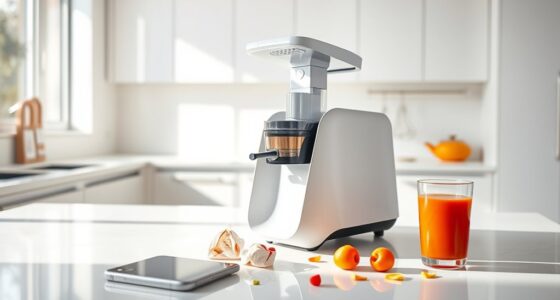
Across the globe, countries are embracing smart cooking by blending robotics, AI, and virtual platforms to transform culinary experiences. In Japan, robotic assistants are common in homes and restaurants, handling complex tasks with precision. In the U.S., smart appliances like connected ovens and voice controls simplify meal prep. Meanwhile, virtual dinner parties using immersive audio and live demonstrations connect people regardless of distance. Keep exploring to discover how these innovations continue to revolutionize the way we cook and connect.
Key Takeaways
- Japan widely adopts robotic kitchen assistants to automate traditional recipes and enhance precision in both homes and restaurants.
- The U.S. integrates AI-powered appliances like smart ovens and connected refrigerators for streamlined meal planning and cooking.
- European countries combine automation with virtual dining platforms, enabling live cooking demos and immersive virtual dinner experiences.
- South Korea leverages smart kitchen technology and virtual social dining to support cultural culinary practices amid urban modernization.
- Global innovations fuse robotics, virtual platforms, and immersive audio-visual tools to modernize and connect culinary traditions worldwide.

Have you ever wondered how technology is transforming the way we experience food around the world? In today’s digital age, traditional dining is evolving rapidly, thanks to innovations like virtual dinner parties and robotic kitchen assistants. These advancements aren’t just about convenience—they’re reshaping cultural culinary practices, making global cuisine more accessible and interactive than ever before. Imagine hosting a dinner from thousands of miles away, connecting with friends through a virtual platform while your robotic kitchen assistant handles the cooking. This blend of virtual socializing and automation allows you to enjoy authentic meals without leaving your home or sacrificing social bonds.
Across different countries, chefs and tech companies are embracing smart cooking to enhance culinary experiences. In Japan, for example, robotic kitchen assistants are becoming common in both commercial and home kitchens. These robots can chop, stir, and even cook complete dishes, reducing prep time and increasing precision. Many households now rely on these assistants to prepare traditional recipes with minimal effort, ensuring consistency and reducing the chance of error. Meanwhile, in Europe, the rise of virtual dinner parties has gained popularity, especially during times when travel isn’t feasible. People connect via video calls, sharing meals that are prepped using automated appliances, creating a sense of communal dining despite physical distance.
Robotic kitchen assistants improve efficiency in Japan, while virtual dinner parties connect Europe through automated meal sharing.
In the United States, the integration of AI-powered gadgets is making smart kitchens a standard feature. Appliances like smart ovens and connected refrigerators help you plan meals, order ingredients, and cook with minimal supervision. These devices often come with voice-controlled interfaces, making cooking more accessible for everyone. Simultaneously, virtual dinner parties have become a staple for social gatherings, allowing friends and family to enjoy a meal together regardless of where they are. These online events often include live cooking demonstrations, where hosts use robotic kitchen assistants to prepare dishes in real-time, turning ordinary virtual meetups into interactive culinary experiences.
Throughout the world, countries are combining these technologies to create innovative dining solutions. The common thread is a desire to connect, simplify, and elevate how we experience food. Whether through robotic appliances that perfect traditional dishes or virtual dinner parties that bring loved ones together across borders, technology is making culinary traditions more dynamic and inclusive. As you explore these innovations, you’ll find that the future of eating isn’t just about food—it’s about creating shared moments, leveraging automation, and breaking down geographical barriers to enjoy global cuisine from your own kitchen. Additionally, the integration of home theatre projectors and immersive audio systems can elevate your virtual dining experiences, making them more engaging and realistic.
Frequently Asked Questions
How Do Smart Kitchens Improve Energy Efficiency Globally?
Smart kitchens improve energy efficiency globally by optimizing appliance use and reducing waste. You can monitor energy consumption in real-time, allowing you to implement better sustainability practices. Automated systems adjust cooking times and temperatures precisely, conserving energy and preventing overuse. These innovations promote energy conservation, lower utility bills, and support global sustainability efforts, making your cooking habits more eco-friendly and efficient.
What Cultural Differences Influence Smart Cooking Adoption?
You’ll find that cultural dining habits and traditional cooking methods heavily influence smart cooking adoption. For example, in Japan, over 80% of households prefer traditional techniques, making smart appliances less common there. Conversely, in countries like South Korea, modern tech integration aligns with their innovative culinary culture. Your openness to blending tradition with technology shapes how quickly you’ll embrace smart kitchens in different regions.
Are There Safety Concerns With Automated Cooking Devices?
Yes, there are safety concerns with automated cooking devices. You should always check safety protocols and guarantee device reliability before use. Faulty devices can pose risks like fires or electrical hazards. To stay safe, follow manufacturer instructions carefully, keep devices updated, and avoid overloading them. Regular maintenance and monitoring help prevent accidents, giving you peace of mind while enjoying the convenience of smart cooking technology.
How Affordable Is Smart Cooking Technology Worldwide?
Smart cooking tech is becoming astonishingly affordable, breaking down cost barriers that once seemed insurmountable. While economic disparities still influence access, prices are dropping rapidly worldwide, making these devices more accessible than ever. In some regions, basic smart appliances are now within reach of average households, transforming everyday cooking. You’ll find that affordability varies, but overall, smart tech is steadily becoming a common part of kitchens everywhere.
What Future Innovations Are Expected in Global Smart Cuisine?
You can expect future innovations in smart cuisine to include AI recipes that adapt to your taste preferences and dietary needs, making cooking more personalized. Flavor personalization will become more advanced, allowing devices to fine-tune seasonings and ingredients for perfect results every time. As technology progresses, smart kitchen devices will become more intuitive, helping you create diverse, healthy, and delicious meals effortlessly, transforming how you experience cooking at home.
Conclusion
As you explore how various nations embrace smart cooking, one thing becomes clear: this revolution is only just beginning. With innovations accelerating and cultures blending, the future of tech cuisine holds surprises you won’t want to miss. Will traditional flavors withstand the surge of automation? Or will they evolve into something entirely new? Stay tuned—what’s coming next could change the way you think about food forever, and you’re invited to be part of that delicious mystery.