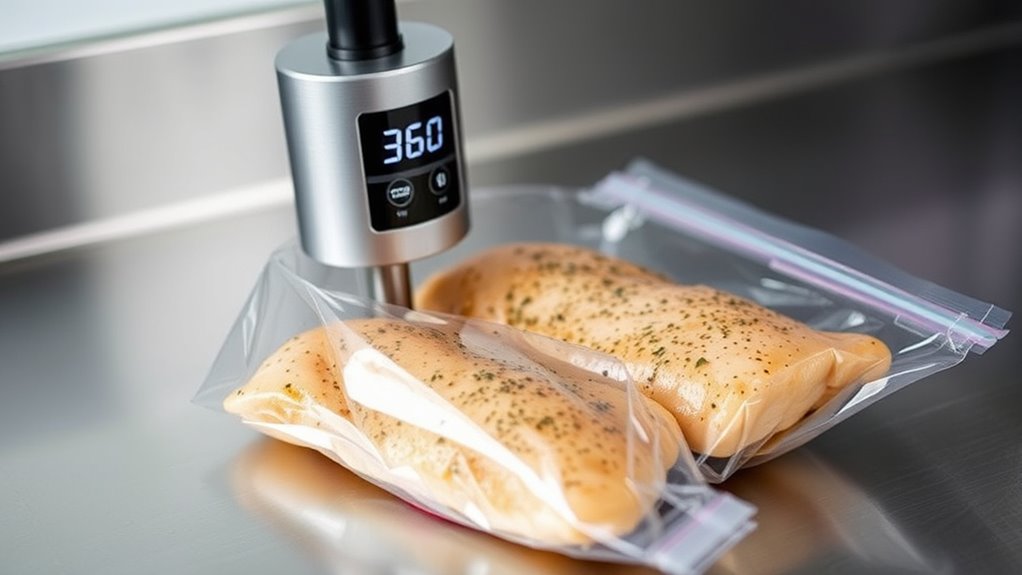

To cook safely with sous vide at low temperatures, you need to control both time and temperature precisely. Maintaining the right temp guarantees pathogens like Salmonella and Listeria are eliminated, especially for meats like poultry and beef. Proper handling and storage prevent bacterial growth after cooking. Using reliable equipment and following recommended guidelines help you achieve perfect results confidently. Keep exploring to learn more about ensuring safe, delicious sous vide dishes every time.
Key Takeaways
- Use precise, reliable immersion circulators to maintain consistent, safe cooking temperatures throughout the process.
- Cook at recommended temperatures for sufficient durations to effectively eliminate harmful pathogens.
- Ensure proper ingredient handling, refrigeration, and storage to prevent bacterial growth before and after cooking.
- Follow established temperature and time guidelines to guarantee food safety and prevent undercooking.
- Reheat leftovers to at least 165°F (74°C) to ensure continued safety and eliminate residual bacteria.
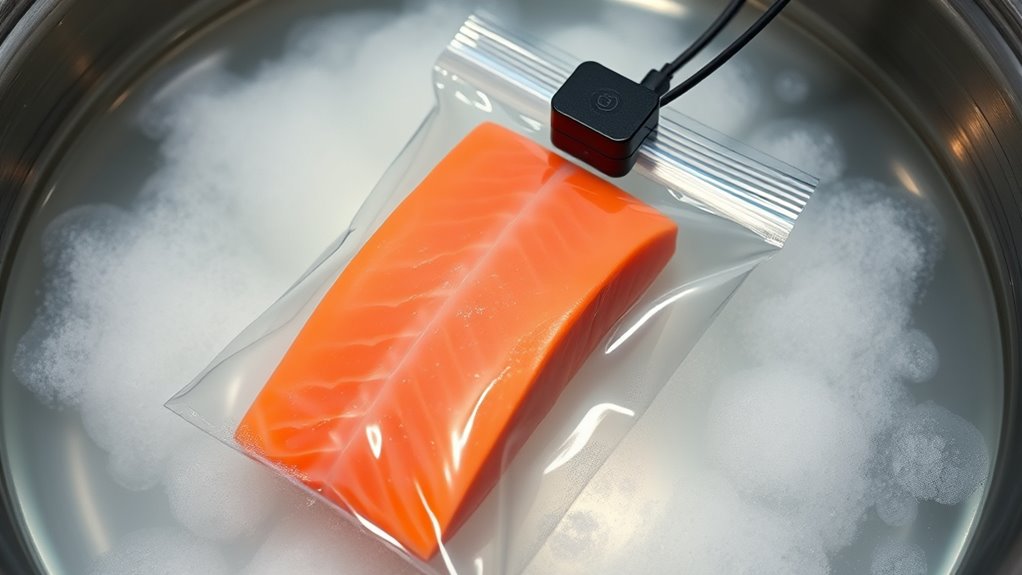
Sous vide cooking offers precise temperature control that can produce perfectly cooked dishes, but it also requires careful attention to safety. When you cook foods at low temperatures for extended periods, maintaining accurate temperature control becomes vital. Even a slight variation can mean the difference between a safe, delicious meal and one that hosts foodborne pathogens. To guarantee your sous vide creations are both flavorful and safe, you need to understand how temperature influences the growth of harmful microorganisms.
Foodborne pathogens, like Salmonella, Listeria, and Clostridium perfringens, thrive at specific temperature ranges. Cooking at too low a temperature might not kill these bacteria, putting you at risk of illness. That’s why knowing the proper temperature for each type of food is essential. For example, poultry should reach an internal temperature of at least 165°F (74°C), while beef can be safely cooked at lower temperatures if held long enough. Using a reliable sous vide cooker with precise temperature control helps you stay within these safe zones, ensuring pathogens are effectively eliminated.
Foodborne bacteria thrive at certain temperatures; precise cooking ensures safety and eliminates pathogens.
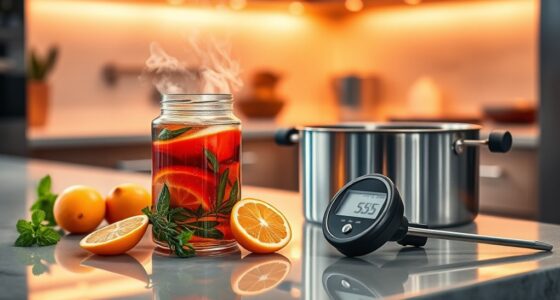
You should also be mindful of the minimum cooking times required at different temperatures. Even if your water bath is at the correct temperature, cooking for too short a period may not destroy all bacteria. Conversely, cooking for too long at unsafe temperatures can sometimes promote bacterial growth if the temperature isn’t high enough. By following recommended guidelines for temperature and time, you minimize the risk of foodborne illness. Investing in a good-quality immersion circulator with accurate sensors can make all the difference in maintaining consistent, safe temperatures.
Another key safety tip is to properly handle and store your ingredients before cooking. Always refrigerate raw meats and seafood until you’re ready to sous vide, and avoid cross-contamination by keeping raw and cooked foods separate. After cooking, promptly cool any leftovers and store them in airtight containers in the refrigerator. This prevents bacteria that might have survived the cooking process from multiplying. Temperature control is fundamental in ensuring that your sous vide process remains both safe and effective. If you’re reheating sous vide leftovers, ensure they reach a temperature of at least 165°F (74°C) before serving.
Frequently Asked Questions
Can Sous Vide Be Used for Canning or Preserving Foods?
No, you shouldn’t use sous vide for canning or preserving foods. Canning safety requires high-temperature processing to kill bacteria and spores, which sous vide doesn’t provide. While sous vide is great for precise cooking and certain preservation techniques, it’s not designed for long-term preservation. To safely preserve foods, follow established preservation techniques like water bath canning or pressure canning, ensuring safety and preventing botulism and other foodborne illnesses.
What Are the Best Practices for Cleaning Sous Vide Equipment?
You should regularly clean your sous vide equipment by following proper sanitation protocols. After each use, detach the water bath and wipe down the exterior with a damp cloth. For the immersion circulator, clean the chamber and probe with a soft cloth, avoiding harsh chemicals. Periodically descale the water bath to prevent mineral buildup. Consistent equipment maintenance guarantees safe, hygienic cooking and prolongs your sous vide device’s lifespan.
How Long Can Vacuum-Sealed Sous Vide Bags Be Stored Safely?
Sure, you can store vacuum-sealed sous vide bags for up to a week if you’re lucky, but don’t be surprised if your food turns into a science experiment faster than you expected. Vacuum storage slows spoilage, yet it’s no magic cure. After a few days, bacteria can still thrive, risking food spoilage. So, for safety’s sake, stick to that week limit and enjoy your meal before it becomes a biohazard.
Are There Specific Foods That Are Unsafe to Cook Sous Vide?
Certain foods can be unsafe to cook sous vide if you don’t follow proper food safety and temperature guidelines. Avoid cooking delicate items like eggs or seafood at too low a temperature for too long, as they risk bacterial growth or foodborne illness. Always adhere to recommended temperature guidelines for different foods, and verify you cook meats thoroughly. When in doubt, use a reliable recipe or consult food safety resources to prevent risks.
How Does Altitude Affect Sous Vide Cooking Times and Temperatures?
Sure, just ignore altitude adjustments and pretend boiling point variation doesn’t exist, and your sous vide cooker will work perfectly—until it doesn’t. To get reliable results, you need to compensate for altitude, since higher elevations lower the boiling point, affecting cooking times and temperatures. Adjust your settings accordingly, or risk undercooked food. Trust us, ignoring altitude effects isn’t an adventurous shortcut, it’s just a recipe for disappointment.
Conclusion
Remember, cooking sous vide is like tending a delicate flame—it requires attention and care. When you follow safety guidelines, you’re not just preserving food but nurturing trust in your culinary journey. Each precise temperature is a steady heartbeat, symbolizing your commitment to quality and safety. By respecting these signals, you ensure your dishes are safe and your confidence burns bright. Embrace the process, and let your passion for perfect, safe meals shine through every time.