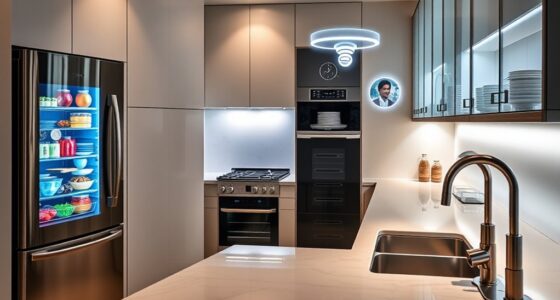
Smart appliances in your kitchen gather detailed data about your routines and preferences, often without clear consent or awareness. This raises ethical concerns about privacy, as your information could be shared or mishandled, especially if security isn’t tight. Manufacturers should be transparent about what data they collect and give you control over it. If you want to understand how to protect your privacy and what responsibilities these companies have, keep exploring these important issues.
Key Takeaways
- Smart appliances collect personal data during routine use, raising privacy concerns and potential misuse risks.
- Users often unknowingly consent to extensive data collection through complex terms and conditions.
- Manufacturers have an ethical obligation to be transparent about data practices and provide user control options.
- Implementing strong security measures protects user data from breaches and unauthorized access.
- Ethical design balances functionality with privacy, minimizing data collection and ensuring informed user consent.
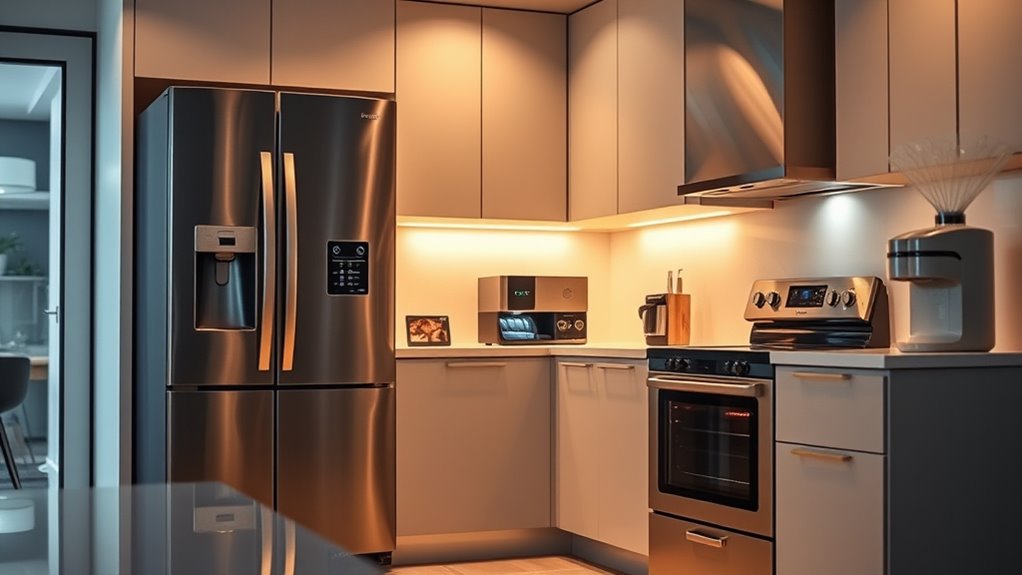
Have you ever wondered what ethical considerations come with the rise of smart appliances in your home? As your refrigerator, oven, and even your coffee maker become connected devices, they start collecting data about your routines, preferences, and daily habits. While this technology offers convenience and personalized experiences, it also raises important questions about privacy concerns and user consent. You might not realize it, but every time you interact with these devices, data is being gathered—sometimes without your explicit knowledge or approval. Manufacturers often assume consent through terms and conditions that are lengthy and confusing, making it easy to overlook how your information is being used. This can lead to situations where your privacy is compromised, and your data becomes vulnerable to misuse or breaches.
Understanding user consent is essential when it comes to smart appliances. Many companies operate under the premise that by agreeing to their terms, you’re giving implicit permission for data collection. However, this approach is problematic because most users don’t read or fully understand what they’re consenting to. You might think that clicking “I agree” is a routine step, but it often means you’re allowing your appliances to track your behavior, share information with third parties, or even sell your data to advertisers. Ethical considerations demand transparency; manufacturers should clearly inform you about what data is collected, how it’s used, and who has access to it. You should have control over your information, with options to opt-in or opt-out of data sharing whenever possible. Additionally, the use of vetted security measures can significantly reduce the risk of data breaches and protect your privacy.
Frequently Asked Questions
How Secure Is My Smart Appliance Data From Hacking?
Your smart appliance data’s security depends on how well companies use data encryption and handle user consent. Manufacturers often encrypt data to protect it from hackers, but vulnerabilities still exist if updates aren’t timely or security features are weak. To keep your data safer, make sure you review the privacy policies, enable security features, and give informed user consent, so you control what information is shared and stored.
Who Owns the Data Collected by Smart Kitchen Devices?
You own the data collected by your smart kitchen devices, but ownership rights often depend on the manufacturer’s policies. Usually, manufacturers claim data sovereignty, meaning they control and use your data, even if you technically own it. It’s crucial to read privacy policies carefully, so you understand how your data is managed and guarantee your rights are protected. Always stay informed about your data ownership rights in the evolving smart appliance landscape.
Can Smart Appliances Function Without Collecting User Data?
Smart appliances can operate without collecting user data, but they often sacrifice some functionality. By prioritizing user privacy and practicing data minimization, you reduce unnecessary data collection, ensuring your personal information stays protected. While limited data use might hinder advanced features, it fosters a safer, more secure smart space. Ultimately, you have the power to choose appliances that balance beneficial operations with respectful respect for your privacy.
How Transparent Are Companies About Data Usage Policies?
Companies vary in transparency about data usage policies, but many fall short of your expectations for user privacy and data transparency. You often have to dig through lengthy privacy policies to understand how your data is collected, stored, and shared. While some brands are more upfront, others obscure details, making it hard for you to make informed decisions. It’s essential you stay vigilant and demand clearer information from your smart appliance providers.
What Are the Privacy Risks of Interconnected Smart Appliances?
Imagine your smart appliances as a web of interconnected eyes watching your every move. The privacy risks include potential breaches if hackers access personal data. You can reduce risks by ensuring consumer consent is clear and data is anonymized, preventing misuse. However, if these protections aren’t in place, your private routines could be exposed or exploited, making it essential to stay informed and cautious about the data you share.
Conclusion
As you embrace smart appliances in your kitchen, remember each device gathers your data, often without you realizing. The ethical questions behind this monitoring aren’t just about privacy—they hint at a future where your choices could be shaped without your knowledge. Are you comfortable risking your autonomy for convenience? The line between innovation and intrusion is thin, and as technology advances, the real questions remain unanswered. Will you stay vigilant or let this silent surveillance slip by unnoticed?