Smart kitchen tech helps you make cooking safer and easier by using appliances with safety features like automatic shut-offs, temperature controls, and remote monitoring. Voice commands and hands-free devices simplify meal prep, while assistive tools reduce strain and improve accessibility. Monitoring systems detect hazards early and alert you or emergency services. Combining these technologies creates a protective, user-friendly environment, and exploring further reveals even more ways to maintain safety and independence in your kitchen.
Key Takeaways
- Smart appliances with safety features, like automatic shut-offs and real-time monitoring, prevent accidents during cooking for seniors and caregivers.
- Voice-activated and hands-free devices enable easy, hygienic control of kitchen functions, reducing hazards.
- Assistive tools and ergonomic designs support independence and safety for users with mobility or sensory limitations.
- Integrated safety systems, including fire detection and remote alerts, ensure prompt responses to kitchen hazards.
- Improved ventilation, sensor-based lighting, and adaptive tools create a safer, more accessible cooking environment.
Smart Appliances for Enhanced Safety and Convenience
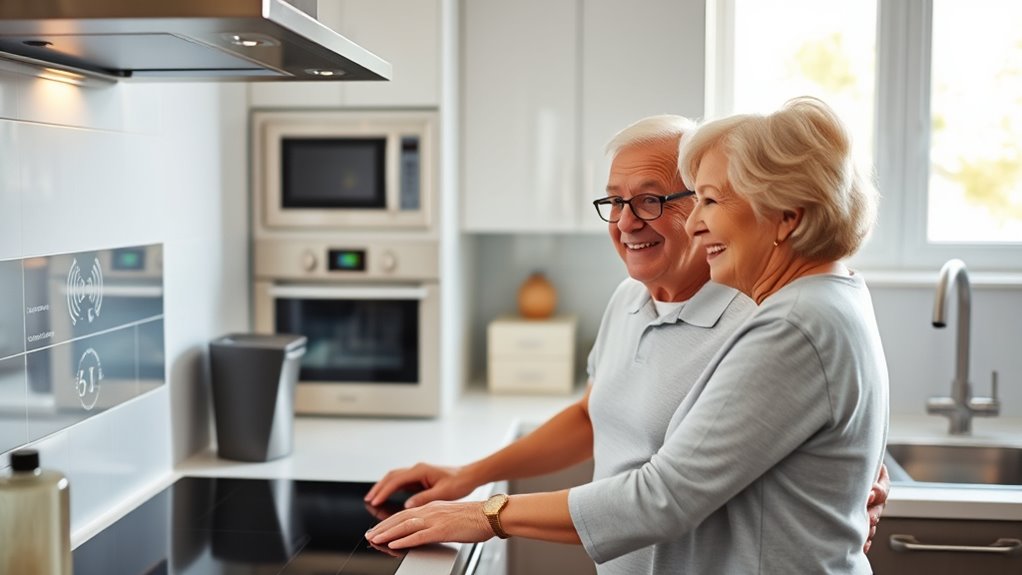
Smart appliances are transforming the kitchen by making it safer and more convenient for seniors and caregivers. These devices support gourmet cooking and preserve culinary traditions by offering precise temperature controls, automated timers, and safety features that prevent accidents. For example, smart ovens can detect when food is cooked perfectly, reducing the risk of burning or overcooking. Induction cooktops automatically turn off when not in use, ensuring safety without sacrificing culinary quality. You can enjoy preparing traditional dishes with confidence, knowing that technology helps maintain consistency and safety. These appliances simplify complex recipes, allowing you to focus on the joy of cooking while protecting loved ones from hazards. Additionally, automation features help reduce the need for constant monitoring, giving caregivers peace of mind. Moreover, energy-efficient technology ensures that these appliances are environmentally friendly and cost-effective over time. Implementing reliable safety mechanisms is crucial for ensuring the appliances operate safely, especially in households with vulnerable individuals. Incorporating smart home integrations can enhance overall safety by enabling remote monitoring and control. Also, integrating load management features can help prevent electrical overloads and ensure safe operation. Overall, smart tech enhances your ability to create delicious, traditional meals safely and effortlessly.
Voice-Activated Devices to Simplify Meal Preparation

Voice-activated devices let you cook hands-free, so you don’t have to touch buttons or screens. With simple voice commands, you can ask for recipes, timers, or step-by-step instructions. This makes meal prep easier and safer, especially when your hands are busy or messy. Additionally, connected kitchen appliances can be programmed and monitored remotely, further enhancing safety and convenience. Incorporating color accuracy in smart displays can improve visibility and reduce mistakes during cooking. Integrating smart home technology into the kitchen allows for seamless automation and personalized settings to support seniors and caregivers. Moreover, utilizing trusted business services ensures you have reliable support for setting up and maintaining these devices. Enhanced user interface design can also improve ease of use for seniors, making technology more accessible and reducing frustration.
Hands-Free Cooking Assistance
Hands-free cooking assistance has become a game-changer in the kitchen, especially for seniors and caregivers who want to stay safe and independent. Gesture controls let you operate devices with simple hand movements, reducing the need to touch surfaces and lowering contamination risks. Augmented reality can overlay step-by-step instructions directly onto your view, guiding you through recipes without needing to handle a screen. Voice-activated devices now often integrate these features, enabling you to manage timers, adjust temperatures, or fetch ingredient lists without lifting a finger. This technology keeps your focus on cooking while maintaining safety and ease. With hands-free assistance, you gain confidence in the kitchen and minimize hazards, making meal prep more accessible and less stressful for everyone involved.
Voice Commands for Recipes
Using voice commands during meal prep can substantially simplify your kitchen routine by allowing you to control appliances, set timers, and find recipes without interrupting your workflow. Voice command customization lets you tailor commands to your preferences, making navigation easier. Many devices offer recipe browsing features that enable you to search for new dishes hands-free, saving time and reducing frustration. You can ask your smart speaker or display to “show me a recipe for chicken soup” or “find vegetarian dinner ideas,” and get instant results. This technology helps you stay focused on cooking instead of juggling devices or touching screens, which is particularly helpful if you have mobility limitations or concerns about hygiene. Overall, voice commands streamline meal prep, making cooking safer and more enjoyable.
Assistive Technology for Ease of Use in the Kitchen
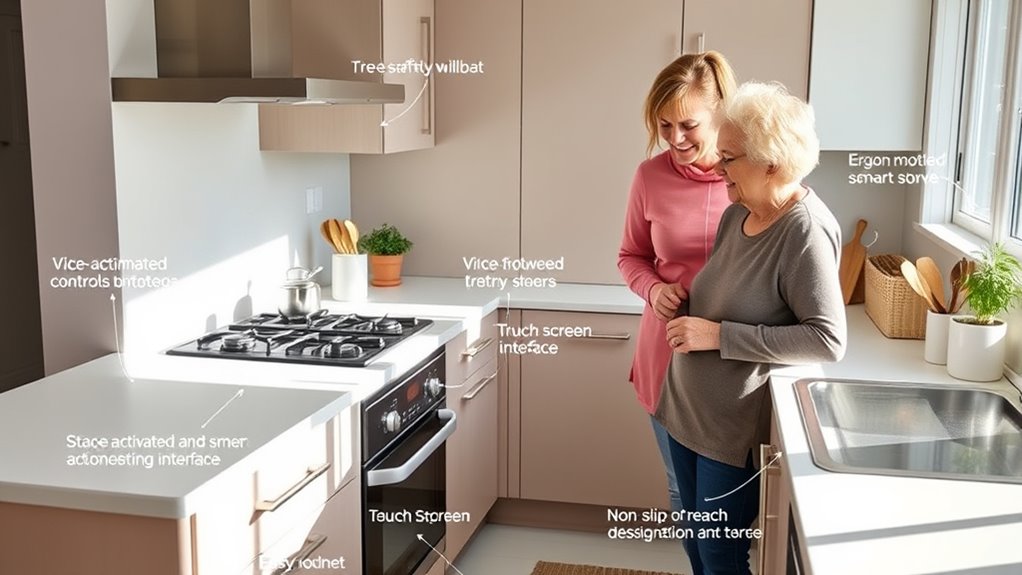
Assistive technology makes kitchen tasks easier and safer for you. Easy-to-operate devices and voice-controlled options help reduce effort and frustration. These tools support independence and confidence while cooking or cleaning. Implementing accessible features can further enhance safety and ease of use in the kitchen. Incorporating Free Floating design principles can help create adaptable and flexible kitchen environments that accommodate various needs. Recognizing the importance of personalization ensures that assistive solutions meet individual preferences and unique challenges. Understanding ear wax odor and other sensory indicators can also aid in maintaining a safe and healthy kitchen environment, especially for those with sensory sensitivities or health conditions. Regularly monitoring and adjusting air quality can further improve safety and comfort in the kitchen space.
Easy-to-Operate Devices
Because ease of use is essential for seniors and caregivers, selecting devices that are simple to operate can make a significant difference in the kitchen. Easy-to-operate devices enhance cooking safety by reducing the risk of accidents and mistakes. Look for appliances with straightforward controls, large buttons, and clear labels to improve kitchen ergonomics, making tasks less strenuous and more accessible. Devices such as electric can openers, one-touch coffee makers, and simple-to-use microwaves help minimize frustration and confusion. These tools allow you to focus on cooking rather than struggling with complicated technology. By choosing intuitive devices, you ensure a safer, more efficient kitchen environment, empowering you or your loved ones to cook with confidence and independence.
Voice-Controlled Options
Voice-controlled devices have become a game-changer in making the kitchen more accessible for seniors and caregivers. With advanced voice recognition technology, you can easily operate appliances without needing physical buttons or switches. Simply speak commands to turn on the stove, adjust the oven temperature, or start a coffee maker. Speech synthesis provides clear audio feedback, confirming your commands and reducing confusion. These devices allow you to multitask safely, keeping your hands free for cooking or handling ingredients. They also minimize the risk of accidents caused by forgetting to turn off appliances. As voice recognition improves, you’ll experience more accurate responses, making your kitchen tasks smoother and safer. Overall, voice-controlled options bring a new level of convenience and independence to your cooking routines.
Monitoring and Safety Systems for Peace of Mind
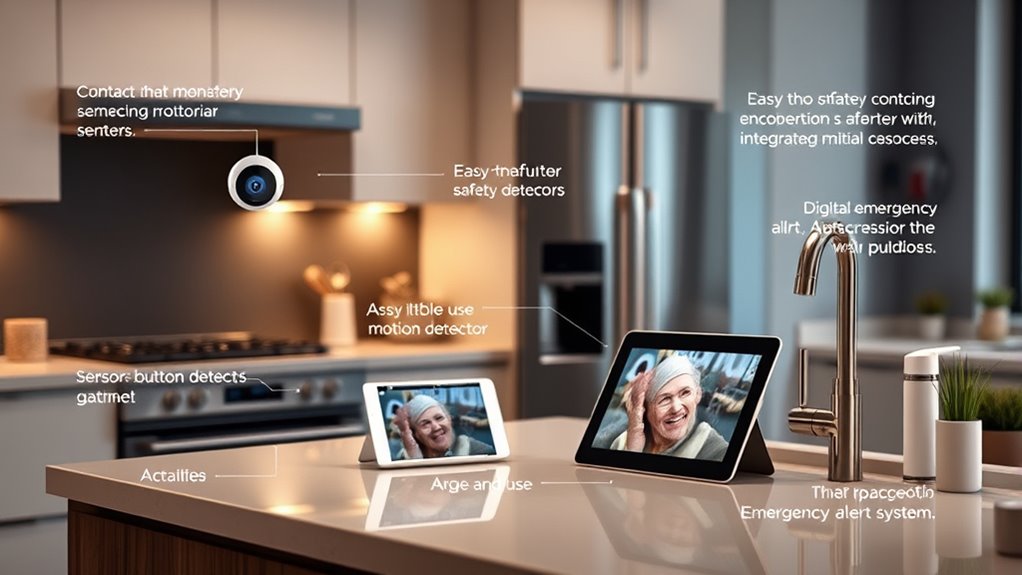
Monitoring and safety systems have become essential tools for ensuring peace of mind in the kitchen, especially for seniors and their caregivers. These systems help prevent fires by alerting you to smoke or heat build-up, reducing the risk of fire accidents. When a potential danger is detected, emergency response features activate immediately, notifying you or emergency services to act quickly. Smart sensors can monitor stove activity, alerting you if the stove is left on or if unusual heat levels are detected. Video cameras or remote monitoring devices let you keep an eye on the kitchen from anywhere, providing reassurance. Additionally, pilot shirts for men aviator often feature durable fabrics and practical designs that can withstand the demands of caregiving environments. Overall, these systems create a safer cooking environment, giving you confidence that help is just a moment away if needed. Incorporating fire detection technology can further enhance safety by providing early warnings for potential fires before they escalate. Regular maintenance and testing of these systems are also crucial to ensure their reliability and effectiveness. Implementing smart home integration can streamline the management of safety features, making it easier to control and monitor safety systems from a single device or app.
Adaptive Tools and Utensils to Reduce Strain
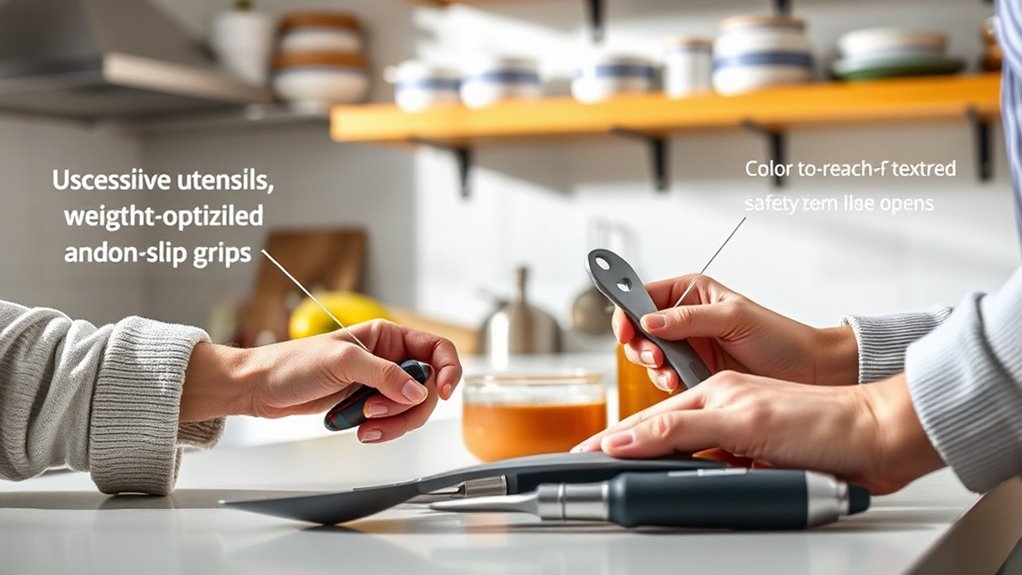
Adaptive tools and utensils play a vital role in making kitchen tasks safer and easier for seniors and caregivers. Ergonomic designs reduce hand fatigue and improve grip, allowing you to handle utensils comfortably and securely. Adaptive cutting tools feature textured handles and adjustable blades, making chopping and slicing less strenuous. These tools help minimize strain on joints and muscles, enabling you to cook more independently. By choosing ergonomic and adaptive options, you can maintain better control and reduce the risk of slips or injuries. Whether you’re preparing a quick snack or a full meal, these specially designed utensils support safer, more efficient cooking. Incorporating adaptive tools into your kitchen routine makes daily tasks less painful and more manageable for everyone involved. Additionally, using proper kitchen ventilation can improve air quality and reduce odors, creating a safer environment for everyone.
Integrating Tech Solutions for a Safer Cooking Environment

To create a safer cooking environment, integrating technology solutions can considerably reduce risks and enhance independence in the kitchen. Modern tech can upgrade traditional cookware and optimize your kitchen layout for safety. For example:
- Smart stoves with automatic shut-off features prevent fires if you forget to turn them off.
- Sensor-based lighting systems adjust brightness, reducing slips and falls in dim areas.
- Voice-activated devices allow you to control appliances without reaching over hot surfaces or cluttered countertops.
These tools streamline your cooking process, minimize hazards, and make your kitchen more accessible. By combining innovative technology with your existing setup, you create a safer, more efficient space that supports your independence and reduces caregiver concerns.
Frequently Asked Questions
How Can I Customize Kitchen Tech for Different Mobility Levels?
You can customize kitchen tech for different mobility levels by selecting devices with adaptive features and a variety of customization options. For limited mobility, opt for tools with easy-grip handles, voice controls, or automatic shut-offs. Adjustable heights and remote controls help users operate appliances comfortably. By tailoring these features to individual needs, you guarantee safer, more accessible cooking experiences that promote independence and confidence in the kitchen.
Are These Devices Compatible With Existing Smart Home Systems?
Most of these devices feature easy device integration and are designed for system compatibility with popular smart home platforms like Alexa, Google Home, or Apple HomeKit. You can check specific product specs to guarantee seamless integration, but generally, they work well with existing systems. This means you can control and customize your kitchen tech effortlessly, making cooking safer and more accessible without needing to overhaul your current setup.
What Training Is Needed for Seniors to Use New Kitchen Technology?
Think of it as teaching a new dance move; you’ll need to start with basic steps. For seniors, focus on hands-on training that emphasizes cooking safety and tech familiarity. Offer simple tutorials, maybe even a quick chart or cheat sheet, and provide ongoing support. With patience and clear instructions, they’ll gain confidence, making kitchen tech a helpful tool rather than a hurdle, much like mastering a new musical tune.
How Secure Is the Data Collected by Safety Monitoring Systems?
The data collected by safety monitoring systems is generally secure thanks to data encryption, which protects your information from unauthorized access. Additionally, reputable systems follow strict privacy policies to ensure your data stays confidential. You should review these policies and verify that encryption protocols are in place. By choosing trusted brands, you can feel confident that your personal information remains safeguarded while enhancing safety in your kitchen.
Can These Tools Be Easily Transferred or Adapted if Needs Change?
Think of these tools as building blocks in a Lego set—you can easily rearrange or transfer them as your needs change. Many safety systems feature modular design and portable devices, making adaptation straightforward. You can move components to different locations or upgrade parts without hassle, ensuring your setup remains flexible. This versatility lets you customize your kitchen tech, keeping it aligned with your evolving safety and convenience requirements effortlessly.
Conclusion
By embracing these kitchen tech innovations, you create a safe harbor where cooking becomes smoother and more enjoyable. Think of technology as a guiding light, illuminating the path to independence and peace of mind. With each smart device and assistive tool, you build a supportive environment that empowers seniors and caregivers alike. Together, these solutions weave a tapestry of safety and ease, making every meal a celebration rather than a worry.